Your fasting blood sugar report comes back “normal.” You breathe a sigh of relief and move on with your day.
But what if the real trouble had already begun years earlier—quietly, steadily, without raising any alarm on the usual tests?
That trouble is insulin resistance. Most people only hear about it after a diagnosis — but insulin resistance symptoms can appear years before blood sugar climbs. It is the body’s earliest warning that the delicate dance between insulin and your cells is faltering.
The good news? It can usually be caught earlier—and reversed—if you know what to look for.
This article walks you through that hidden phase: what insulin resistance symptoms look like, what causes them, and the simple lab markers that can reveal the problem long before diabetes appears.
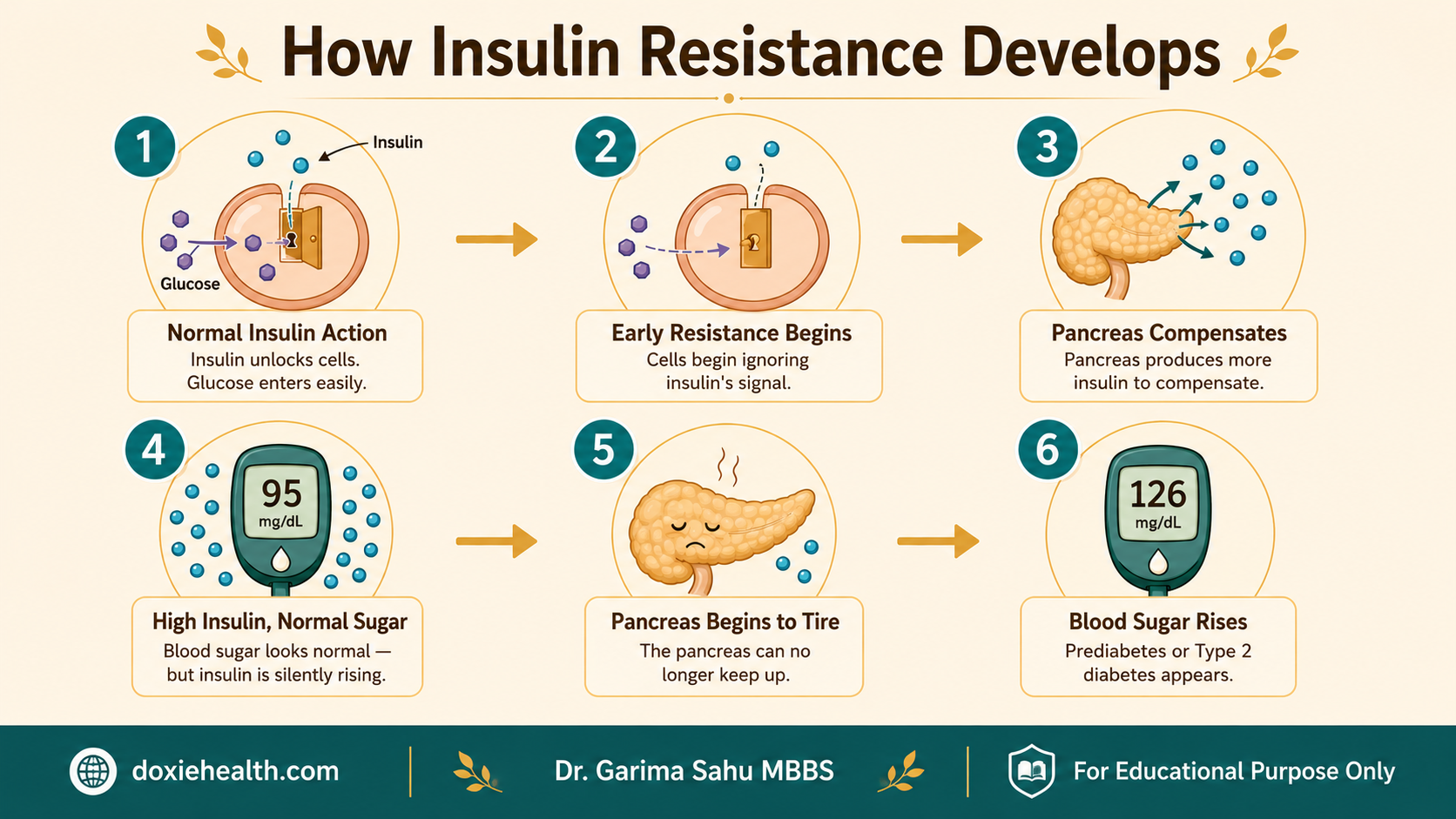
How insulin resistance develops over time — from normal insulin action to prediabetes. Image: DoxieHealth
Every time you eat, your food is broken down into glucose and enters the bloodstream.
Imagine insulin as a key produced by your pancreas that opens the doors of your cells so glucose (sugar) from the food you eat can enter and energize them. In insulin resistance, the locks grow stiff. The cells stop responding as well to the key.
Your pancreas, ever loyal, produces more and more insulin to force the doors open. For a while, blood sugar stays normal.
But behind the scenes:
Insulin levels climb higher
The pancreas works harder
Metabolic stress quietly builds
Eventually, the system tires. Blood sugar begins to rise, and prediabetes or Type 2 diabetes appears — often years after insulin resistance began.
Fat stored deep in the abdomen — called visceral fat — wraps around your liver, pancreas, and intestines like a harmful blanket. Unlike fat under the skin, this fat actively releases inflammatory chemicals and free fatty acids that directly impair insulin action.
This is why a thickening waistline is one of the earliest and strongest red flags, even if your overall weight or BMI looks “fine.”
People with a normal BMI can carry excess visceral fat and develop insulin resistance without knowing it.
Asian cut-offs for clinical concern:
Men: waist circumference > 90 cm
Women: waist circumference > 80 cm
If your weight tends to gather around your middle rather than your hips, that pattern alone is worth discussing with your doctor.
Insulin Resistance Symptoms: The Subtle Warnings
Insulin resistance rarely announces itself loudly. Instead, it whispers through everyday complaints that are easy to dismiss:
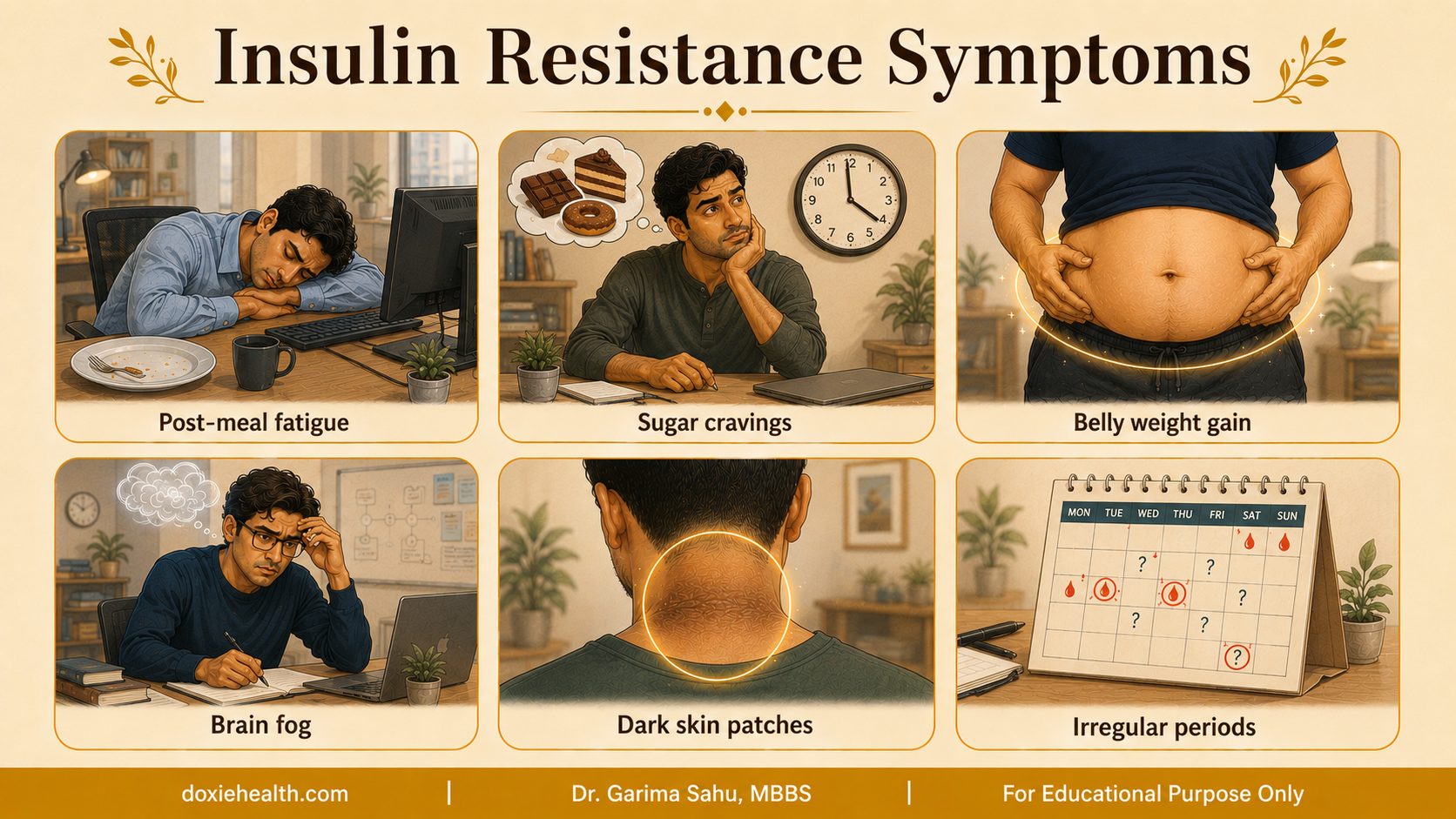
Common insulin resistance symptoms to watch for. Image: DoxieHealth
Common early insulin resistance symptoms to watch for:
Symptom
What It May Indicate
Persistent fatigue, especially after meals
Cells are not receiving glucose efficiently, so energy stays low even after eating.
Strong sugar cravings
Brain senses poor glucose uptake and demands quick fuel.
Difficulty losing weight, especially around the abdomen
High insulin actively promotes fat storage, particularly in the abdominal region.
Brain fog and poor concentration
Brain depends heavily on glucose for energy and is vulnerable to impaired uptake.
Dark, velvety skin patches (acanthosis nigricans)
Classic skin sign of chronically elevated insulin
High blood pressure or elevated triglycerides
Insulin resistance affects both blood vessel tone and how the liver manages fat.
Acanthosis nigricans deserves special mention. If you notice darkened, thickened skin — particularly at the back of the neck, in the armpits, or in other skin folds — this is one of the most visible physical signs of high insulin and should be brought to your doctor’s attention.
These symptoms may feel unrelated. Metabolically, they share the same root.
What Drives Insulin Resistance?
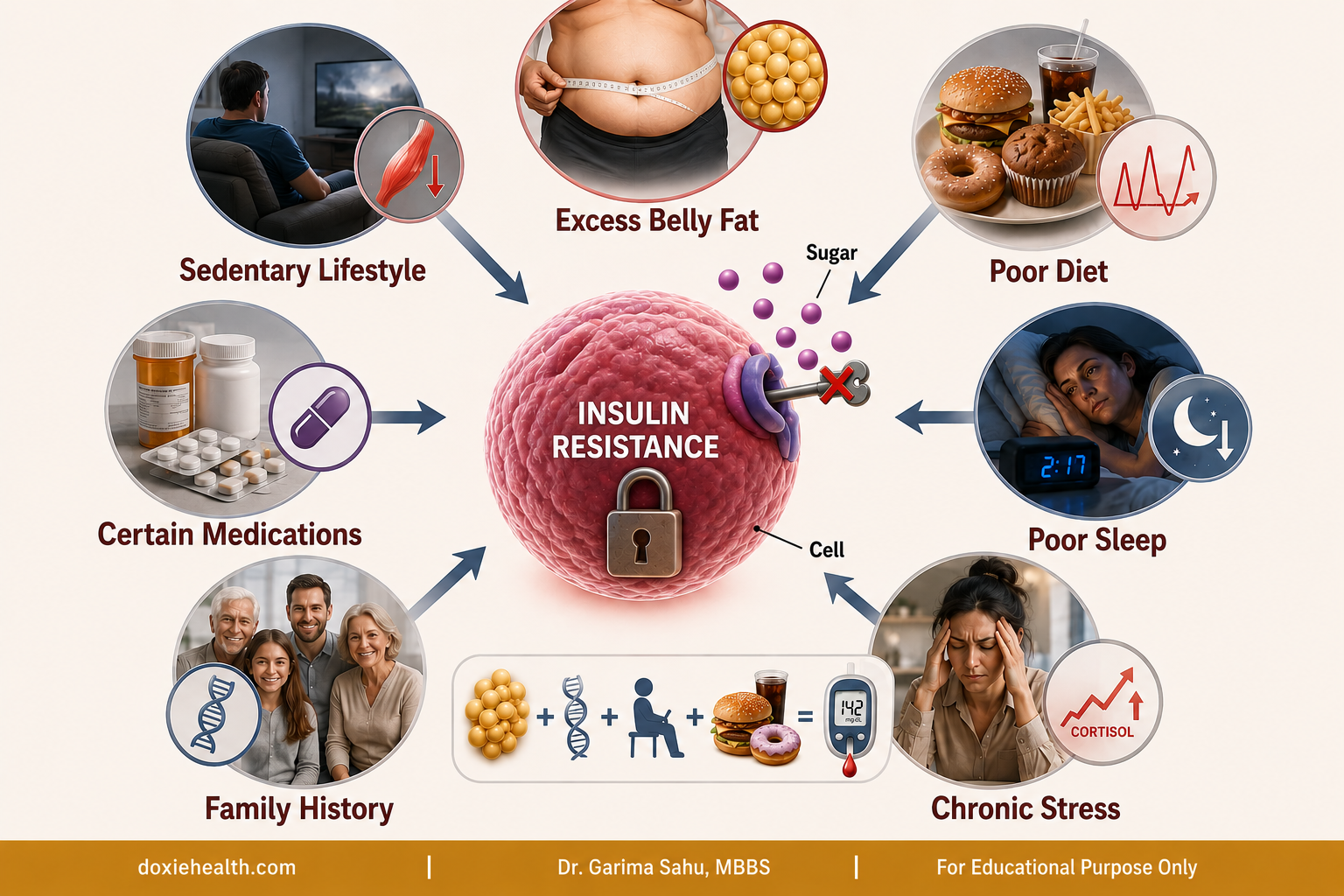
Key drivers of insulin resistance. Image: DoxieHealth
It is rarely one single factor. Insulin resistance develops from a combination of lifestyle and genetic predisposition:
Excess visceral (abdominal) fat — the most powerful and most modifiable driver
Sedentary lifestyle — muscles are a primary site of glucose uptake; inactivity reduces this significantly
A diet high in refined carbohydrates and ultra-processed foods causes repeated insulin spikes over time
Poor or disrupted sleep — even one week of disrupted sleep measurably reduces insulin sensitivity
Certain medications — long-term corticosteroids, some antipsychotics
South Asians are particularly prone to developing insulin resistance at lower body weights and BMI levels — making early awareness especially important in the Indian context.
Conditions Rooted in Insulin Resistance
Insulin resistance is not just a stepping stone to diabetes. It sits at the metabolic root of several common and serious health conditions. This one process fuels many modern health challenges:
Type 2 Diabetes — The Primary Consequence
This is the most direct outcome. When the pancreas can no longer compensate with extra insulin, blood glucose begins to rise — first into the prediabetes range, then into frank Type 2 diabetes. Detecting insulin resistance early is the single most valuable opportunity to prevent this progression.
PCOS (Polycystic Ovary Syndrome)
Insulin resistance is present in up to 70% of women with PCOS, regardless of body weight.
High insulin stimulates the ovaries to overproduce androgens (male hormones), disrupting ovulation and driving the hallmark features of PCOS:
Irregular periods
Acne
Excess hair growth
Improving insulin sensitivity is now a core component of PCOS management.
Non-Alcoholic Fatty Liver Disease (NAFLD)
Excess insulin drives fat accumulation inside the liver.
Insulin resistance and fatty liver reinforce each other in a damaging cycle — each worsens the other.
NAFLD is now one of the most prevalent liver conditions in urban India, frequently discovered incidentally on an abdominal ultrasound.
Hypothyroidism
Thyroid hormones regulate metabolic rate and directly influence insulin sensitivity.
When thyroid function is low, glucose metabolism slows, and insulin resistance worsens.
The two conditions frequently co-exist and amplify each other — addressing thyroid function alone can meaningfully improve the metabolic picture.
Chronically elevated insulin promotes systemic inflammation, raises triglycerides, suppresses HDL cholesterol, and damages blood vessel walls, all independent risk factors for heart disease and stroke, even in the absence of diabetes.
The Most Useful Test: HOMA-IR
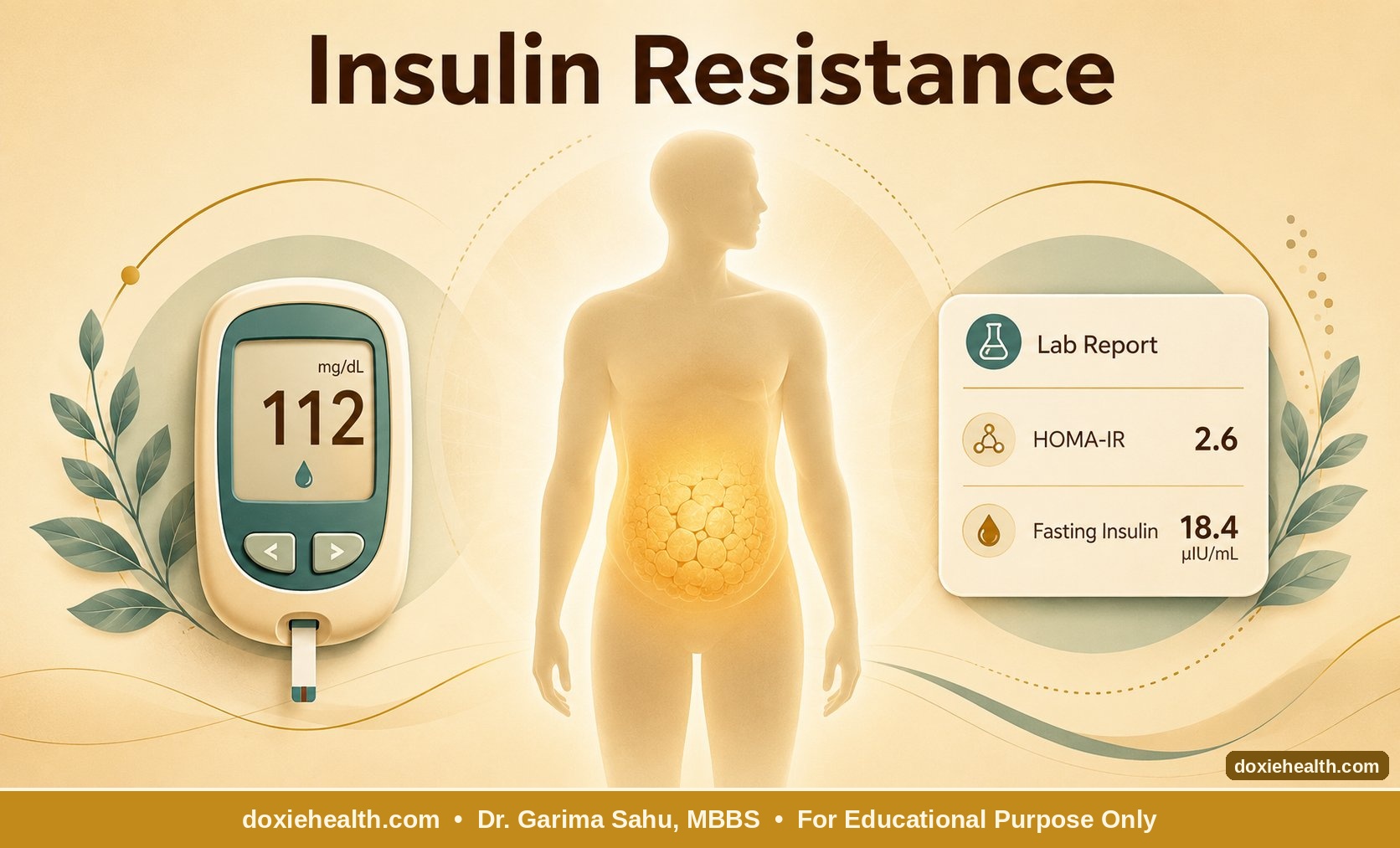
The most practical tool is the HOMA-IR score, calculated from two routine fasting tests available at most Indian labs.
It is calculated using two fasting blood values:
Fasting glucose
Fasting insulin
[ INSERT: How Insulin Resistance Develops — Pathway Diagram ]
The HOMA-IR Formula
When glucose is in mg/dL (standard in Indian labs): HOMA-IR = (Fasting Insulin µIU/mL × Fasting Glucose mg/dL) ÷ 405
When glucose is in mmol/L: HOMA-IR = (Fasting Insulin µIU/mL × Fasting Glucose mmol/L) ÷ 22.5
Interpreting Your Result
HOMA-IR Score
Interpretation
< 1.0
Optimal insulin sensitivity
1.0 – 1.9
Normal range
2.0 – 2.9
Early or mild insulin resistance
≥ 3.0
Significant insulin resistance
Note: Reference ranges vary between labs and populations. South Asians may show clinically meaningful insulin resistance at lower cut-offs. Always interpret results alongside your symptoms and full clinical picture.
Why Fasting Insulin Matters
Fasting insulin is not part of routine health panels in India — yet it is one of the most important early indicators of metabolic change.
Blood sugar can stay completely normal for years while insulin quietly climbs. By the time fasting glucose becomes abnormal, the metabolic damage is already well advanced.
Ask your doctor specifically for a fasting insulin test if you have:
Abdominal weight gain or visible belly fat
PCOS or irregular periods
A family history of Type 2 diabetes
Fatty liver on ultrasound
Any of the insulin resistance symptoms described above
Most diagnostic labs in India offer fasting insulin at a low cost. It is a small addition to your blood panel that can reveal metabolic risk years before standard tests would flag anything.
Can Insulin Resistance Be Reversed?
Yes — and this is the hopeful part. Insulin resistance is not a life sentence.
Research consistently shows that insulin sensitivity can genuinely improve with targeted lifestyle changes:
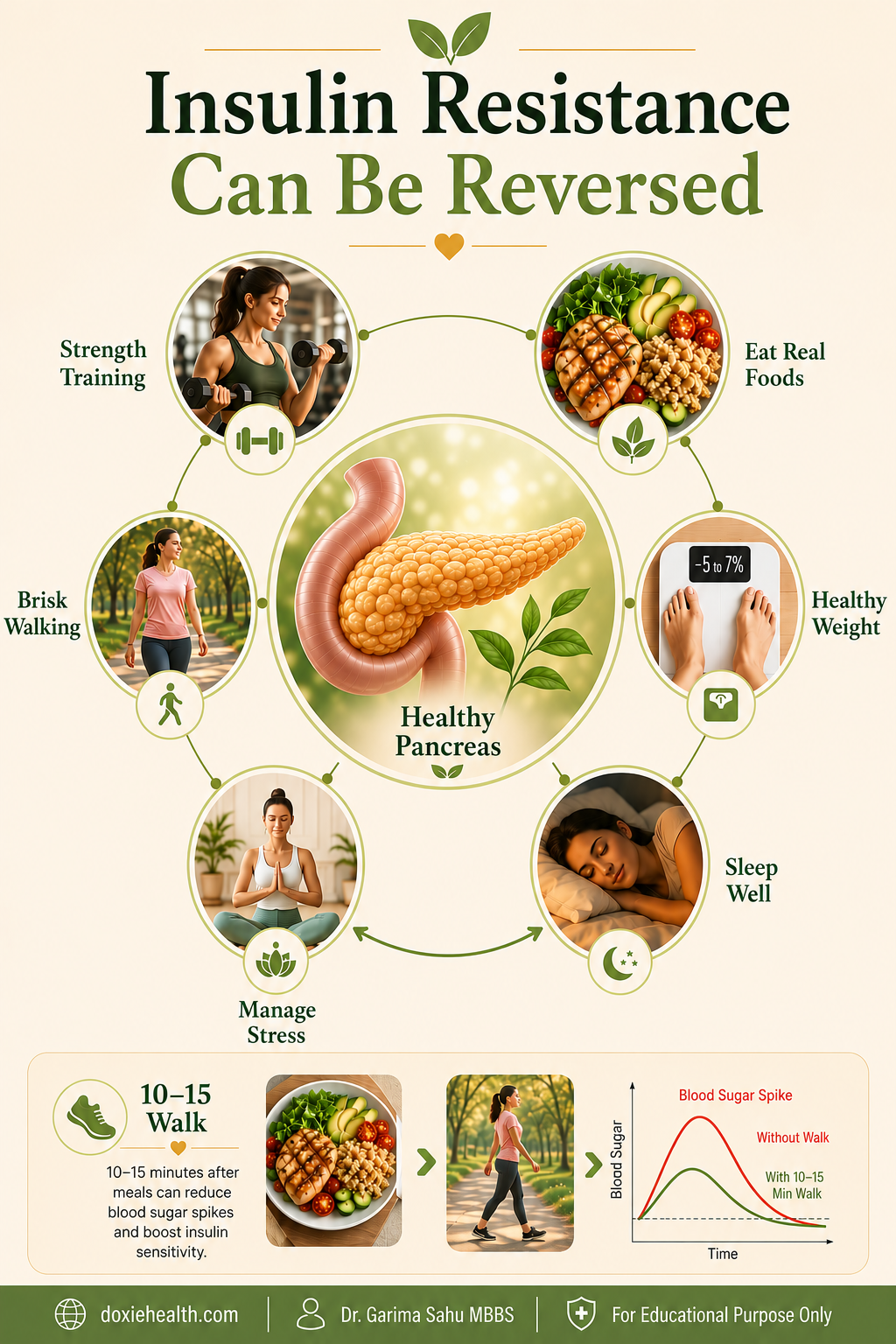
Lifestyle habits that improve insulin sensitivity and support a healthy pancreas.
Strength training 2–3 times per week — building muscle mass directly increases the body’s capacity to absorb glucose, reducing the load on insulin
Regular movement, especially after meals — even a 10–15 minute walk, makes a measurable difference
Brisk Walking-Aim for at least 30 minutes of brisk walking most days of the week; it is one of the most accessible and consistently effective tools for improving insulin sensitivity.
Reducing refined carbohydrates and ultra-processed foods
Losing 5–7% of body weight if overweight
Improving sleep quality and duration– aim to sleep by 10 pm, avoid screens for at least 30 minutes before bed, and allow a full 8 hours before waking. Even short-term sleep disruption measurably reduces insulin sensitivity, making this one of the most underrated levers in metabolic health
Managing chronic stress actively
In some cases, your doctor may also prescribe medication alongside these changes. But lifestyle is where the real work — and the real results — happen. And the earlier you start, the more the body responds.
How Often Should You Test?
Your Situation
Recommended Frequency
No symptoms, normal weight, no family history or other risk factors
Fasting glucose or HbA1c every 3 years starting at age 35
Overweight or obesity (BMI ≥25)
Fasting glucose/Insulin or HbA1c every 3 years (or more often if other risks present) starting at age 35
One or more additional risk factors (family history, high blood pressure, sedentary lifestyle, PCOS, history of gestational diabetes, etc.)
Start earlier (age 30–35) and test every 1–3 years depending on risk level
Prediabetes (already diagnosed)
At least once a year or as advised by doctor
👩⚕️ Doctor’s Note A “normal” fasting glucose does not mean all is well. If you carry weight around your waist, feel tired after meals, crave sweets, or have a family history of diabetes or PCOS, request a fasting insulin and HOMA-IR. It is a small, low-cost step that can give you years of advantage.
When Should You Be Concerned?
Speak to your doctor sooner rather than later if you notice:
Persistent fatigue, brain fog, or abdominal weight that won’t shift despite lifestyle changes
Dark, velvety skin patches on the back of the neck or in skin folds
HOMA-IR of 2.0 or above on a fasting blood test
Fasting glucose approaching or above 100 mg/dL
A diagnosis of PCOS, fatty liver, high triglycerides, or low HDL — all of which frequently co-exist with insulin resistance
The Takeaway
Insulin resistance is common, quiet, and often missed. It hides behind normal blood sugar reports for years — while fatigue, cravings, and a growing waistline try to get your attention.
The tests exist. The solutions work. Listen to the whispers now—so you never have to face the louder storm later.
Questions to Ask Your Doctor
Can you add a fasting insulin test to my next blood panel?
What is my HOMA-IR score, and what does it mean for me specifically?
Could my abdominal weight gain be a sign of insulin resistance?
Do my triglyceride or HDL levels suggest a metabolic problem?
Should I be screened for PCOS or fatty liver given my symptoms?
What single lifestyle change would make the biggest difference in my case?
References
Matthews DR, et al. Homeostasis model assessment: insulin resistance and beta-cell function from fasting plasma glucose and insulin concentrations in man. Diabetologia. 1985;28(7):412–9. Read here →
Reaven GM. Role of insulin resistance in human disease (Banting Lecture 1988). Diabetes. 1988;37(12):1595–607. Read here →
Petersen MC, Shulman GI. Mechanisms of insulin action and insulin resistance. Physiol Rev. 2018;98(4):2133–2223. Read here →
Azziz R, et al. Criteria for defining polycystic ovary syndrome as a predominantly hyperandrogenic syndrome: an androgen excess society guideline. J Clin Endocrinol Metab. 2006;91(11):4237–45. Read here →
WHO Expert Consultation. Appropriate body-mass index for Asian populations and its implications for policy and intervention strategies. Lancet. 2004;363(9403):157–63. Read here →
Mohan V, et al. Epidemiology of type 2 diabetes: Indian scenario. Indian J Med Res. 2007;125(3):217–30. Read here →
Medical Disclaimer: This article is for educational purposes only and does not constitute medical advice, diagnosis, or treatment. Always consult a qualified healthcare professional for guidance about your specific health situation.
WRITTEN & MEDICALLY REVIEWED BY
Dr. Garima Sahu, MBBS
Physician & Founder, DoxieHealth
This article is for educational purposes only and does not replace professional medical advice
[…] 👉 For a deeper understanding of how insulin resistance develops and what your lab markers show, see: [Insulin Resistance Explained: Signs, Causes & Lab Markers] […]





Leave a Reply