What is diabetes? Most people living with Type 2 diabetes don’t know they have it — not for months, sometimes not for years.
By the time the diagnosis appears on a routine blood test, the body has often been living with high blood sugar silently for a long time.
India carries this burden more than most. Over 101 million Indians live with diabetes, and an estimated 136 million more have prediabetes. Millions remain unaware, untested, and slowly moving toward diagnosis.
Understanding diabetes — what it is, how it develops, and what it can lead to is the first step toward prevention and long-term health.
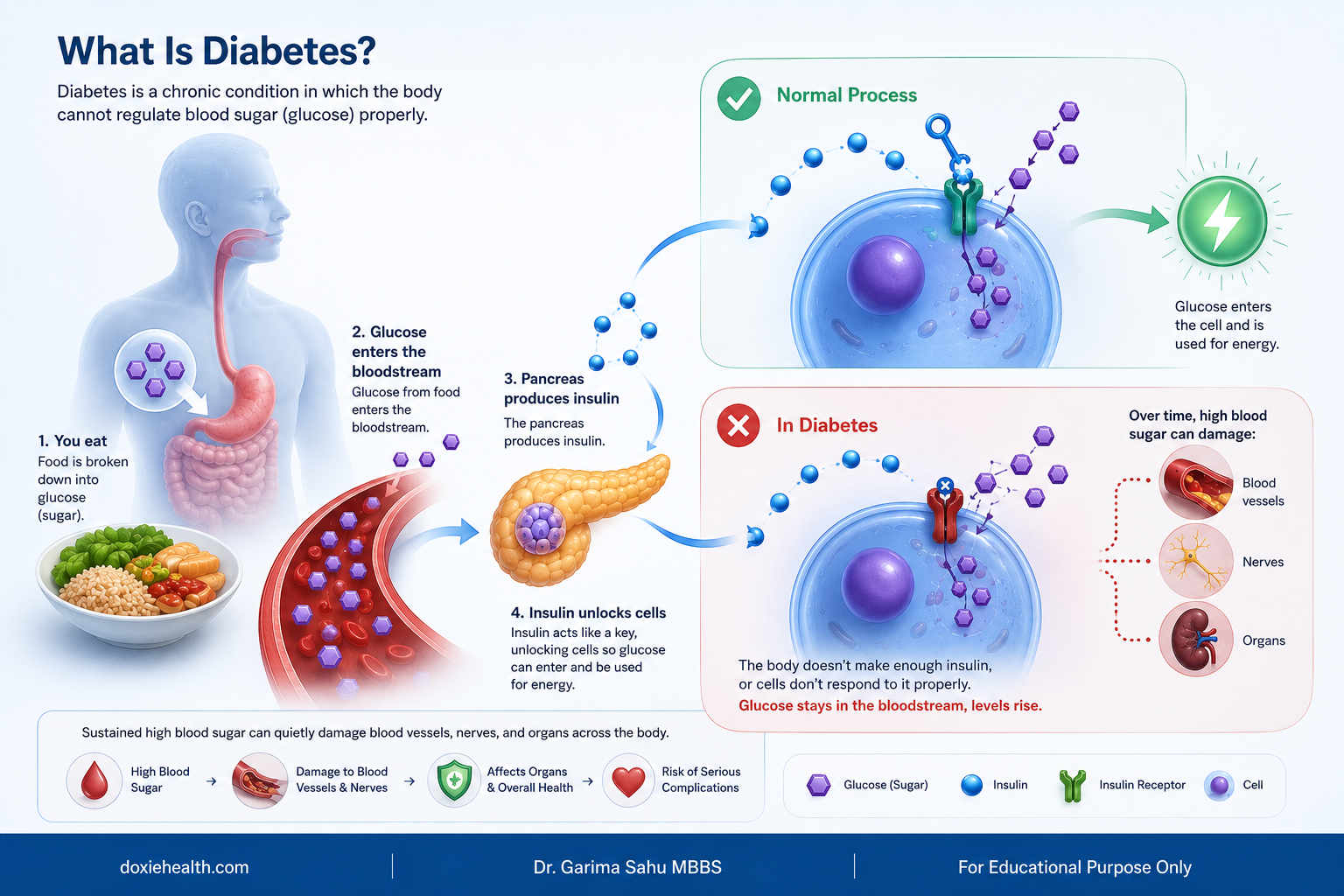
Diabetes is a chronic condition in which the body cannot regulate blood sugar (glucose) properly.
How the body normally uses insulin to move glucose into cells vs what happens in diabetes when glucose stays in the bloodstream and damages organs over time.
Glucose(Sugar) is the primary fuel your cells run on. When you eat, your digestive system breaks food down into glucose, which enters the bloodstream.
From there, a hormone called insulin — made by the pancreas acts like a key, unlocking your cells so glucose can enter and be used for energy.
In diabetes, this system breaks down. Either the pancreas doesn’t produce enough insulin, or the body’s cells stop responding to it properly, or both.
The result: glucose stays in the bloodstream, levels rise — and sustained high blood sugar quietly damages blood vessels, nerves, and organs across the body.
Types of Diabetes
Type 2 Diabetes
Type 2 accounts for approximately 90–95% of all diabetes cases worldwide.
It develops slowly over the years and is strongly linked to lifestyle and genetics, especially in South Asian populations.
The process begins with insulin resistance. The pancreas tries to compensate by producing more insulin, but over time, it cannot keep up. Blood sugar rises and stays elevated. This is why many people feel completely fine for years before diagnosis.
The good news is that Type 2 is often preventable, and in its early stages, can be reversed through lifestyle changes. This is precisely why early detection matters so much.
Type 1 is an autoimmune condition. The immune system mistakenly attacks and destroys the insulin-producing beta cells in the pancreas.
Without insulin, blood sugar rises rapidly and uncontrollably. It typically presents in childhood or young adulthood, is not caused by diet or lifestyle, and requires lifelong insulin therapy.
Gestational Diabetes
Gestational diabetes develops during pregnancy and increases the lifetime risk of developing Type 2 diabetes by 7–10×.
The hormones of pregnancy promote insulin resistance, and if the pancreas cannot compensate, blood sugar rises. It usually resolves after delivery, but it significantly increases a woman’s lifetime risk of developing Type 2 diabetes.
Women who have had gestational diabetes should continue monitoring their blood sugar regularly, even years after delivery.
What Causes Type 2 Diabetes?
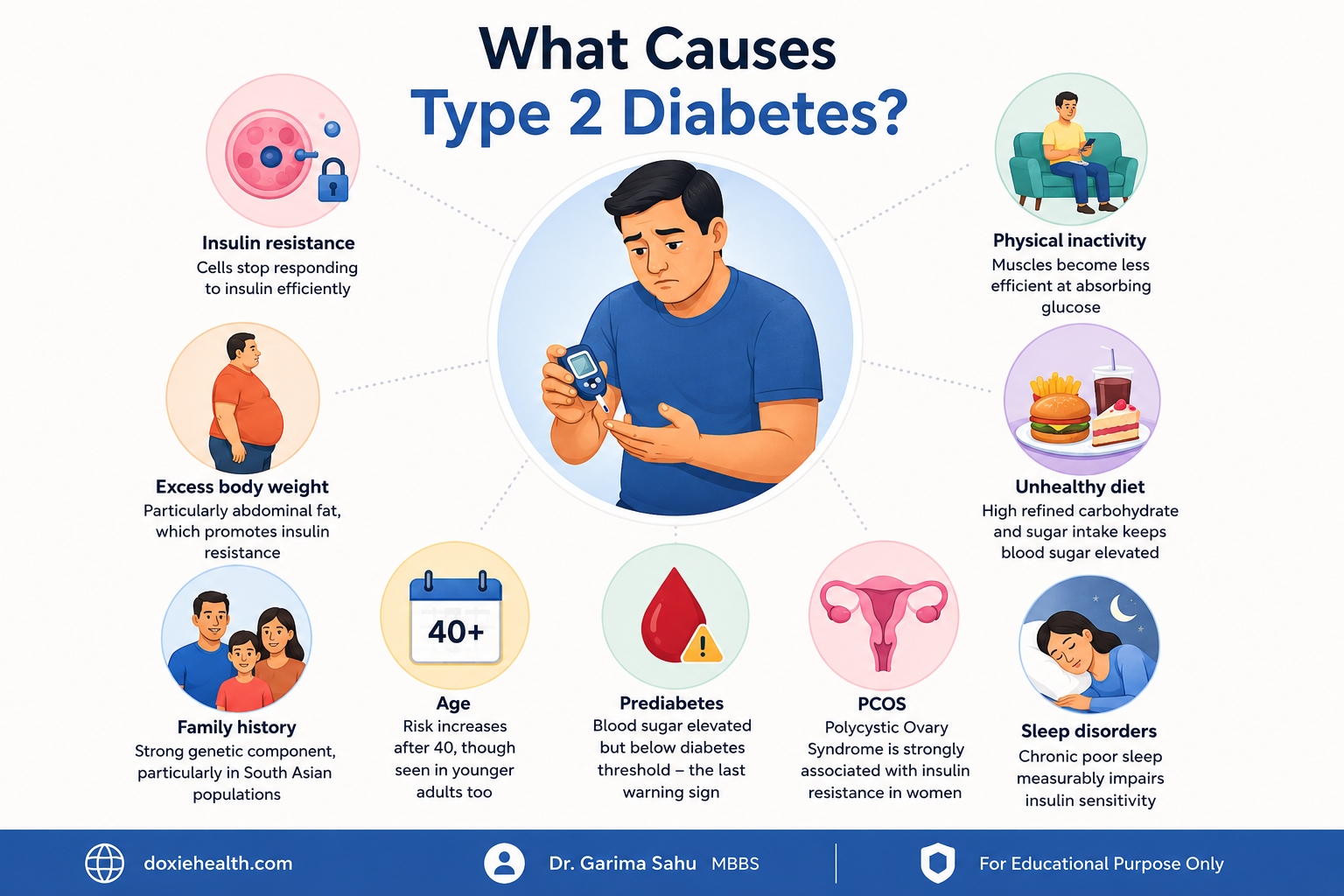
Type 2 rarely has a single cause. It develops slowly through a combination of everyday factors:
Key lifestyle, genetic, and health factors that contribute to the development of Type 2 Diabetes.
Insulin resistance — the foundational mechanism; cells stop responding to insulin efficiently
Excess body weight — particularly abdominal fat, which actively promotes insulin resistance
Physical inactivity — muscles become less efficient at absorbing glucose from the blood
Unhealthy diet — high refined carbohydrate and sugar intake keeps blood sugar chronically elevated
Family history — a strong genetic component, particularly in South Asian populations
Age — risk increases after 40, though Type 2 is increasingly seen in younger adults
Prediabetes — blood sugar elevated but below the diabetes threshold; the last warning sign before diagnosis
PCOS — polycystic ovary syndrome is strongly associated with insulin resistance in women
A note on South Asian risk: Indians and South Asians are genetically predisposed to develop Type 2 diabetes at a lower body weight and younger age than Western populations. Normal BMI does not mean low risk.
Symptoms of Type 2 Diabetes
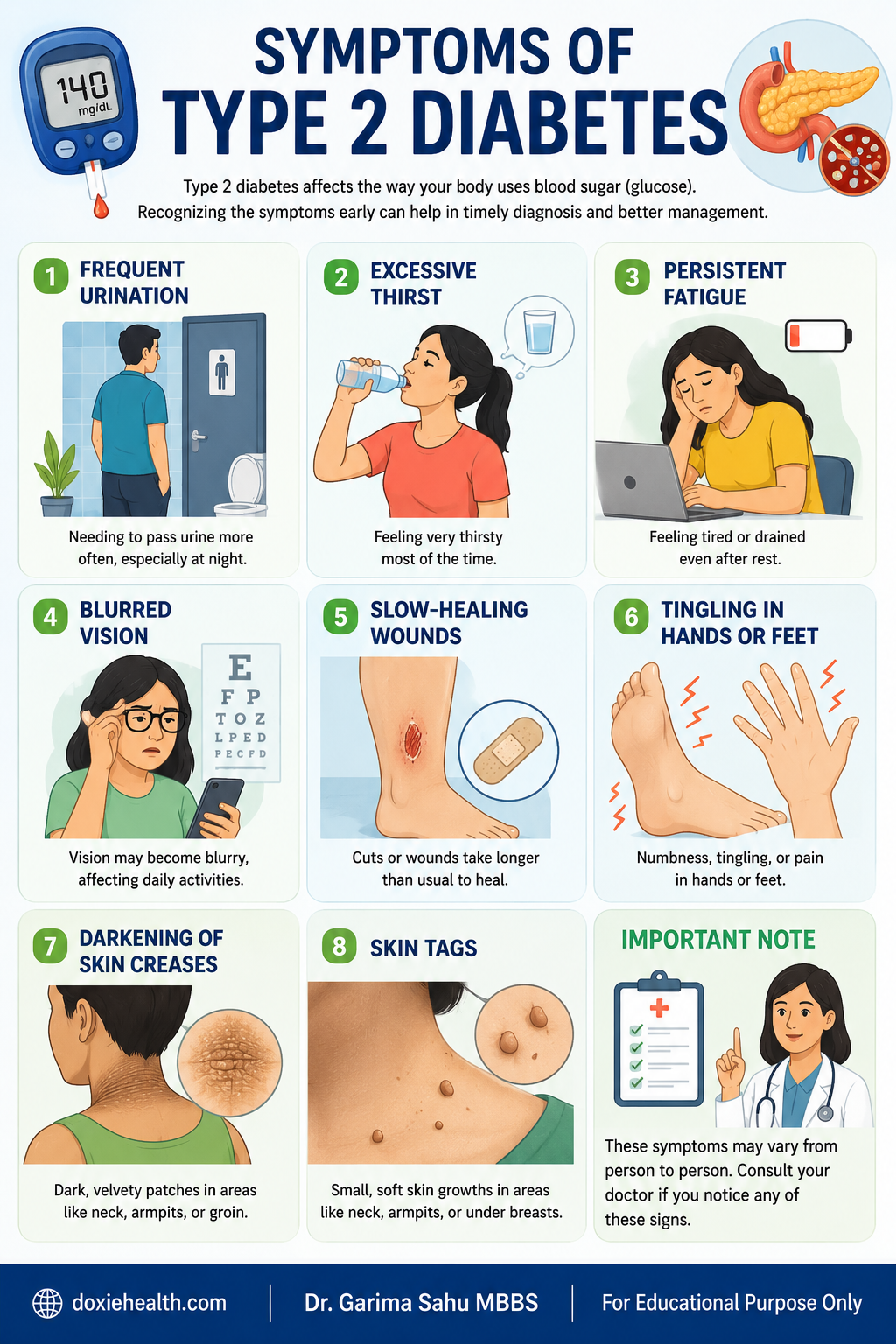
Type 2 often has no symptoms in the early stages. When symptoms do appear:
Common symptoms of Type 2 diabetes explained visually to help early recognition and encourage timely medical consultation.
Symptom
Why It Happens
Frequent urination
Kidneys flush excess glucose out through urine
Excessive thirst
Sign of insulin resistance — common at the neck and armpits
Persistent fatigue
Cells are starved of energy despite high blood glucose
Blurred vision
High sugar causes fluid shifts inside the eye lens
Slow-healing wounds
Impaired blood supply and weakened immune response
Tingling in hands or feet
Early nerve damage from sustained high glucose
Darkening of skin creases
Sign of insulin resistance — common at neck and armpits
How Is Diabetes Diagnosed?
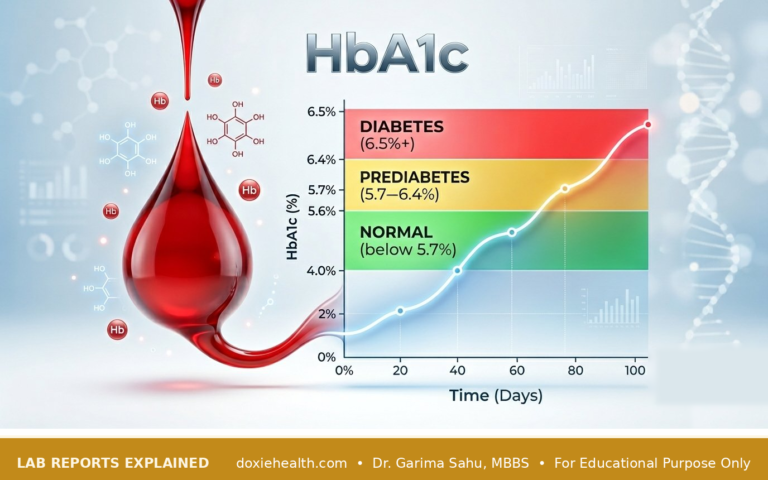
Diabetes is confirmed through blood tests — not symptoms alone.
The three key tests are fasting blood sugar, post-meal glucose, and HbA1c, each measuring a different dimension of blood sugar control.
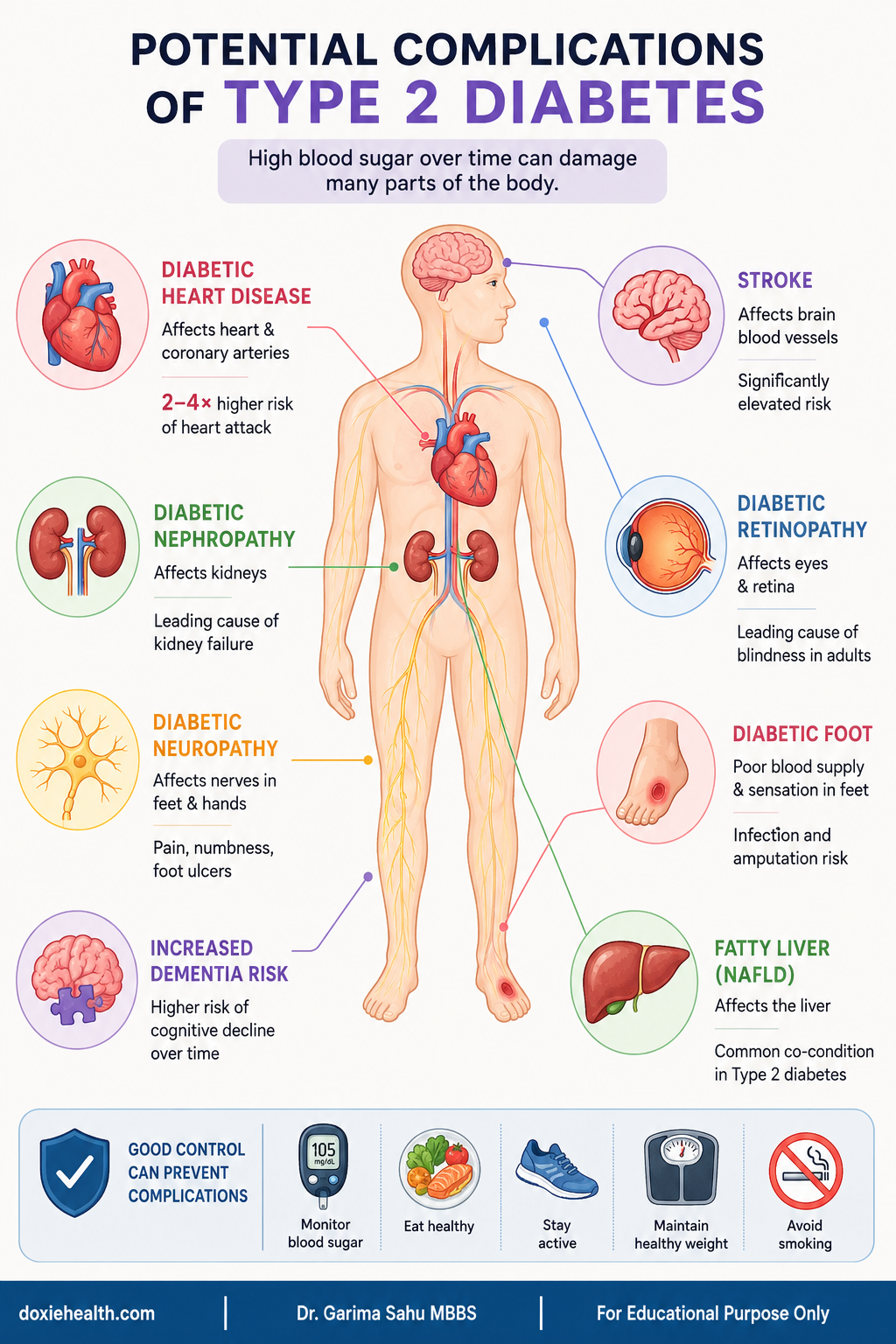
This is where diabetes becomes more than a blood sugar problem.
Image: DoxieHealth
Long-term high glucose damages blood vessels throughout the body.
The complications below are real, common, and largely preventable with good control.
Complication
What’s Affected
Key Risk
Diabetic heart disease
Heart & coronary arteries
2–4× higher risk of heart attack
Diabetic nephropathy
Kidneys
Leading cause of kidney failure
Diabetic retinopathy
Eyes & retina
Leading cause of blindness in adults
Diabetic neuropathy
Nerves — feet, hands
Pain, numbness, foot ulcers
Diabetic foot
Feet — blood supply & sensation
Infection and amputation risk
Stroke
Brain blood vessels
Significantly elevated risk
Increased dementia risk
Brain (memory & thinking)
Higher risk of condnitive decline
Fatty liver (NAFLD)
Liver
Common co-condition in Type 2
Heart Disease
People with Type 2 diabetes have a two to four times higher risk of developing heart disease.
High blood sugar damages the inner lining of blood vessels, making them stiff, narrow, and prone to blockage. This is why cardiovascular care — managing blood pressure, cholesterol, and weight — is an essential part of diabetes treatment, not just an add-on.
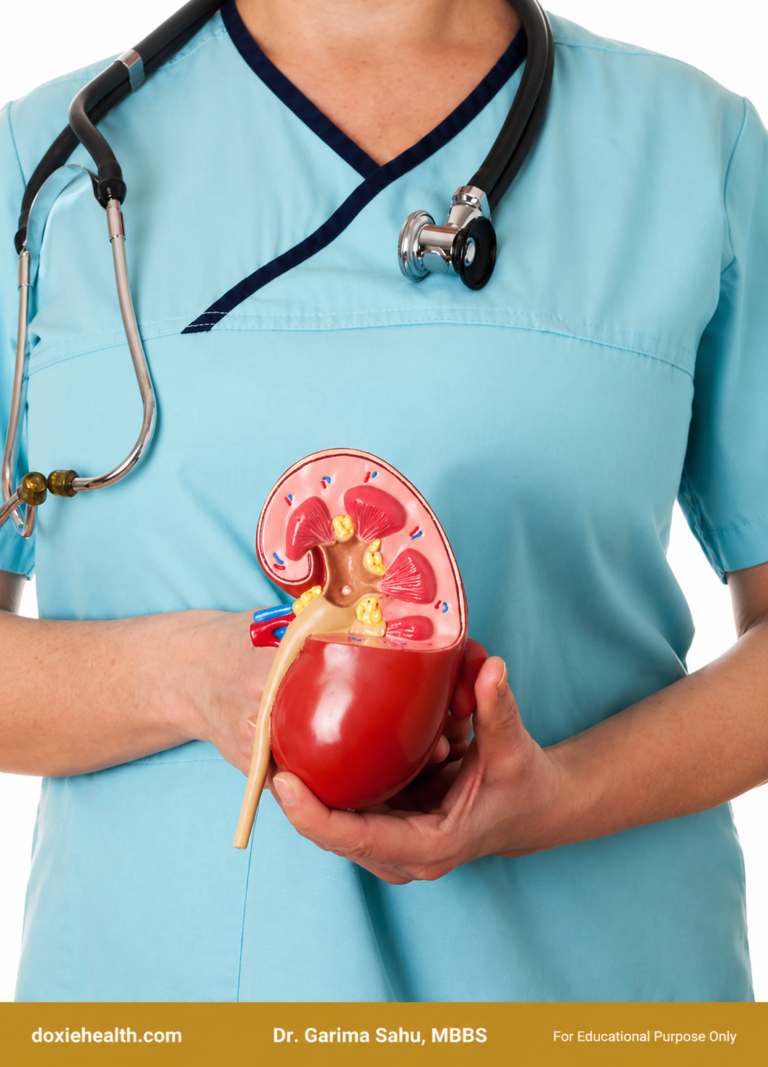
Kidney Disease (Diabetic Nephropathy)
The kidneys contain millions of tiny clusters of blood vessels that filter the blood. Sustained high glucose levels gradually damage these vessels.
The first detectable sign is microalbuminuria — small amounts of protein appearing in the urine, visible on a kidney function panel.
Caught early, progression can be slowed significantly. Left unmanaged, diabetic nephropathy is the leading cause of kidney failure requiring dialysis.
Eye Damage (Diabetic Retinopathy)
The retina — the light-sensitive lining at the back of the eye — is supplied by a dense network of tiny blood vessels. High blood sugar weakens and damages them.
In the early stages, there are no symptoms. By the time vision changes become noticeable, significant damage may already be present.
Annual dilated eye exams are essential for every person with diabetes, not optional.
How Often Should You Test?
No risk factors, blood sugar normal: Fasting glucose or HbA1c annually from age 40 onward — or from 35 if you are South Asian with a family history of diabetes.
Risk factors present (abdominal obesity, PCOS, prediabetes, family history, sedentary lifestyle): HbA1c and fasting glucose every 6 months; full metabolic panel annually.
Diagnosed with Type 2 diabetes: HbA1c every 3 months until controlled, then every 6 months. Kidney function (KFT + urine microalbumin), lipid profile, and dilated eye exam annually.
Key Clinical Insights
Type 2 diabetes in South Asians frequently develops at a normal BMI — body weight alone is not a reliable screen
Prediabetes is reversible; early-stage Type 2 often is too, with consistent lifestyle change
The most dangerous complications — kidney disease, retinopathy, nerve damage — are largely silent in early stages; regular testing is the only way to catch them before they progress
Blood sugar control is essential, but so is managing blood pressure and cholesterol — all three drive complication risk
👩⚕️ Doctor’s Note Type 2 diabetes is one of the most manageable chronic conditions — if caught early and taken seriously. Most of the severe complications are the result of years of undetected or uncontrolled disease. Regular blood tests, even when you feel completely fine, are genuinely protective. Do not wait for symptoms before you test.
When Should You Be Concerned?
HbA1c ≥ 6.5% on two separate tests → Confirmed diabetes; begin management without delay
Protein detected in urine on routine test → Early kidney involvement; needs immediate follow-up
Sudden vision changes, chest pain, or loss of sensation in the feet in a known diabetic → Seek care promptly
The Takeaway
Diabetes does not have to become a story of complications. That outcome belongs to unmanaged, undetected disease — not to people who understand what is happening and act early.
The numbers on your blood report are the earliest warning system you have. Learning what they mean is one of the most important things you can do for your long-term health.
👉 Ready to understand how to manage Type 2 diabetes through diet, exercise, and lifestyle? Read: [Managing Type 2 Diabetes: Diet, Exercise & Lifestyle] — coming soon
👉 Not yet diagnosed but at risk? Read: [How to Prevent Diabetes: Lifestyle Changes That Work] — coming soon
Questions to Ask Your Doctor
What is my current HbA1c, and where does that put my risk?
Do I have prediabetes, and what should I be doing about it now?
Should I also be checking my kidney function and cholesterol?
How often should I monitor my blood sugar at home?
Are there any early signs of complications I should be watching for?
References
American Diabetes Association. Standards of Medical Care in Diabetes — 2024. Diabetes Care. 2024;47(Suppl 1). Read here →
International Diabetes Federation. IDF Diabetes Atlas, 10th Edition. 2021. Read here →
Mohan V, et al. Epidemiology of Type 2 Diabetes: Indian Scenario. Indian J Med Res. 2007;125(3):217–230. Read here →
Fonseca VA. Defining and Characterizing the Progression of Type 2 Diabetes. Diabetes Care. 2009;32(Suppl 2):S151–S156. Read here →
Kasper DL, et al. Harrison’s Principles of Internal Medicine, 21st Edition. Chapter: Diabetes Mellitus.
Medical Disclaimer: This article is for educational purposes only and does not constitute medical advice, diagnosis, or treatment. Always consult a qualified healthcare professional for guidance about your specific health situation.
WRITTEN & MEDICALLY REVIEWED BY
Dr. Garima Sahu, MBBS
Physician & Founder, DoxieHealth
This article is for educational purposes only and does not replace professional medical advice



Leave a Reply