If your uric acid test came back abnormal, you’re not alone; it’s one of the most commonly flagged results on a routine blood panel.
Most people associate it only with gout, but this small molecule says more about your kidneys, metabolism, and even what you ate yesterday than that single association suggests.
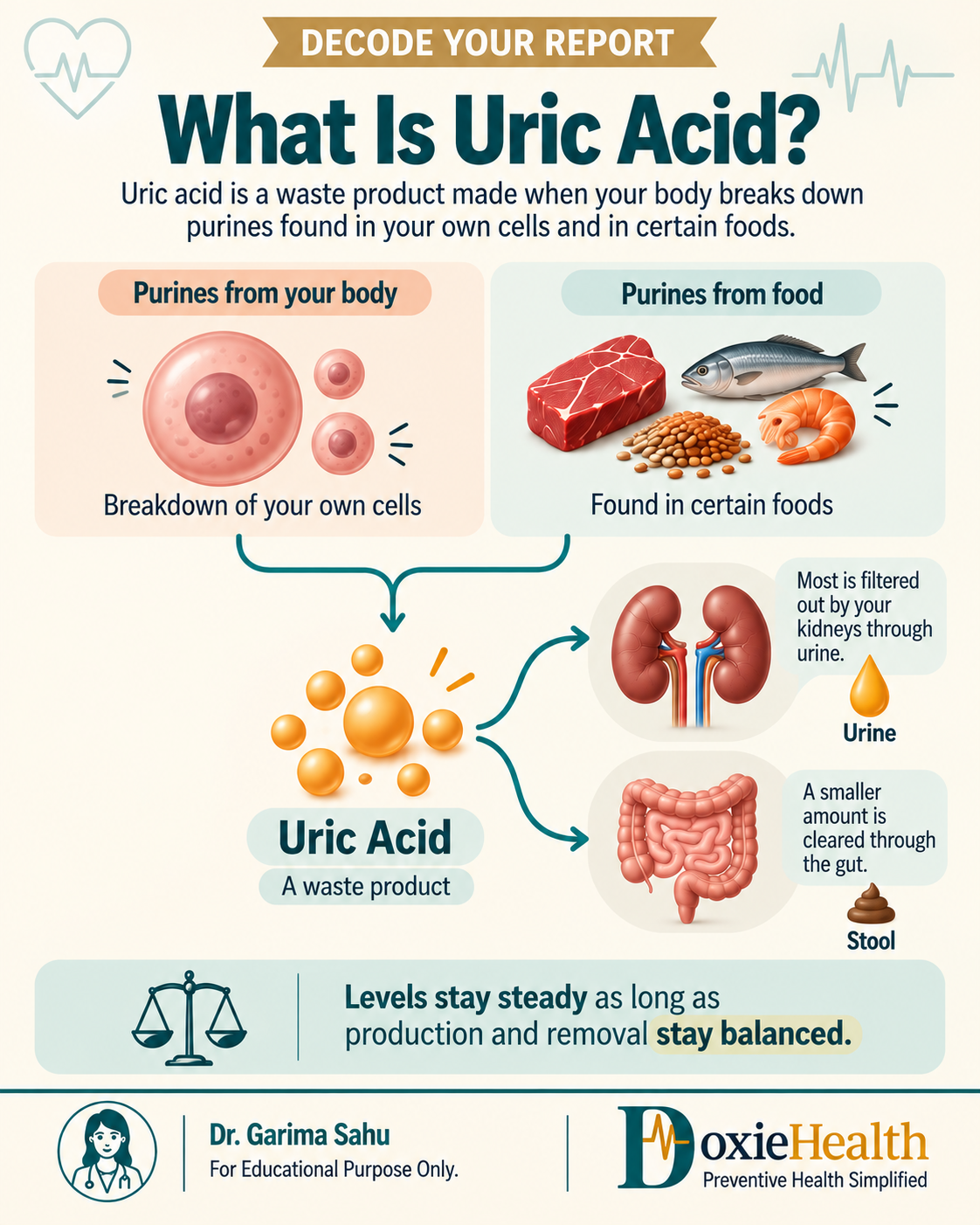
Uric acid is a waste product your body makes when it breaks down old cells and certain purine-rich foods. Most of the uric acid is filtered by your kidneys and cleared out of the body through urine. A smaller share is cleared by the gut.
Levels stay steady as long as production and removal stay balanced; problems start when either side of that equation shifts.
Uric acid is produced when your body breaks down purines and is removed mainly through the kidneys. Understanding how it is produced and cleared helps explain why uric acid levels can rise.
Purine-Rich Foods to Be Aware Of
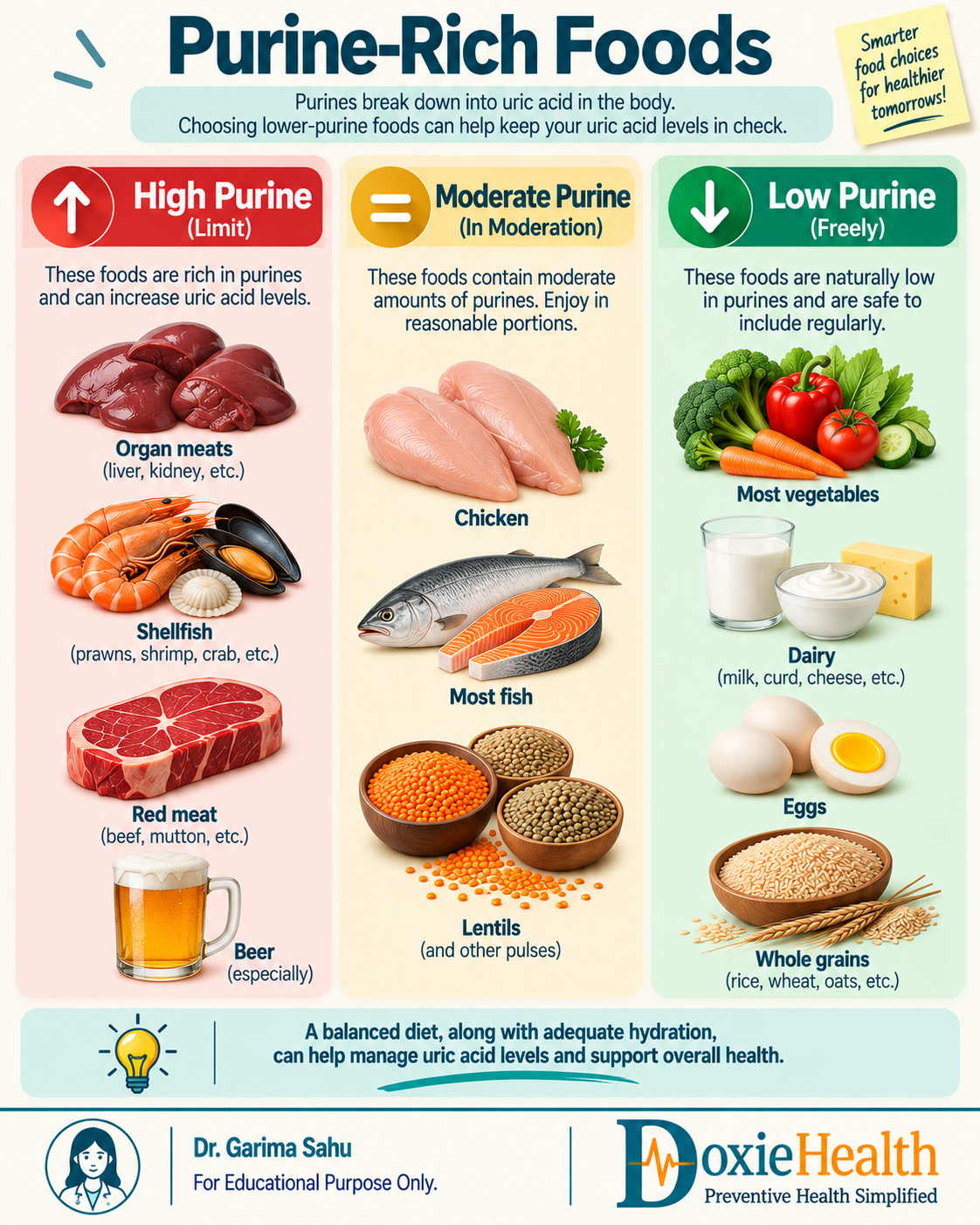
Purines are broken down by your body into uric acid. So, eating large amounts of purine-rich foods can increase the amount of uric acid your body produces.
Organ meats, red meat, shellfish, and beer are among the major dietary contributors. Beer may have an added effect because alcohol can also reduce the kidneys’ ability to remove uric acid.
What you eat can influence uric acid levels. 🥩🥦 Here’s a simple guide to high, moderate, and low-purine foods—and where they fit in your diet.
Note: Plant-based purine sources (lentils, spinach) don’t appear to raise gout risk the way animal purines do; a distinction worth knowing before cutting healthy foods unnecessarily.
Quick Reference: Normal Ranges
Group
Normal Range
Adult men
3.4–7.0 mg/dL
Adult women
2.4–6.0 mg/dL
Children
2.0–5.5 mg/dL
Women tend to have a lower risk because estrogen helps the kidneys excrete uric acid more efficiently; one reason levels often rise after menopause.
Uric Acid Test: Related Parameters Your Doctor May Check
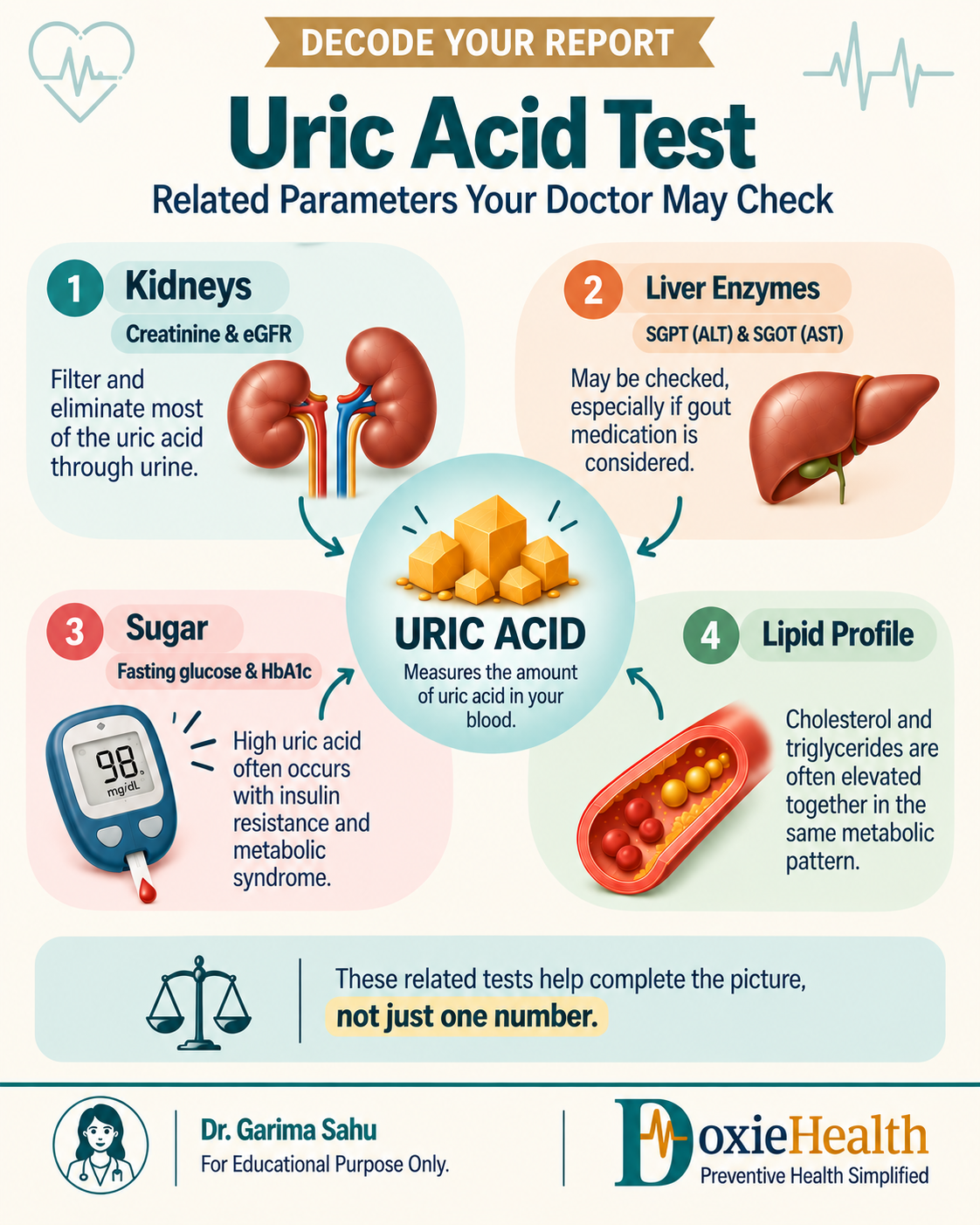
Uric acid test rarely tells the full story alone. These are commonly ordered together:
Parameter
Why It’s Checked With Uric Acid
Creatinine & eGFR
Kidneys are the main route of uric acid elimination, so kidney function is an important part of the clinical picture
SGPT/SGOT (liver enzymes)
Purine metabolism partly involves the liver; also relevant if gout medication is being considered
Fasting glucose / HbA1c
High uric acid clusters with insulin resistance and metabolic syndrome
Lipid profile
Often elevated together in the same metabolic pattern
Your uric acid test and Understanding related tests such as kidney function, blood sugar, liver enzymes, and lipid profile can help put the result into context.
If your uric acid is high alongside abnormal creatinine or liver enzymes, that combination matters more than any single number. See our Kidney Function Test (KFT) Explained article.
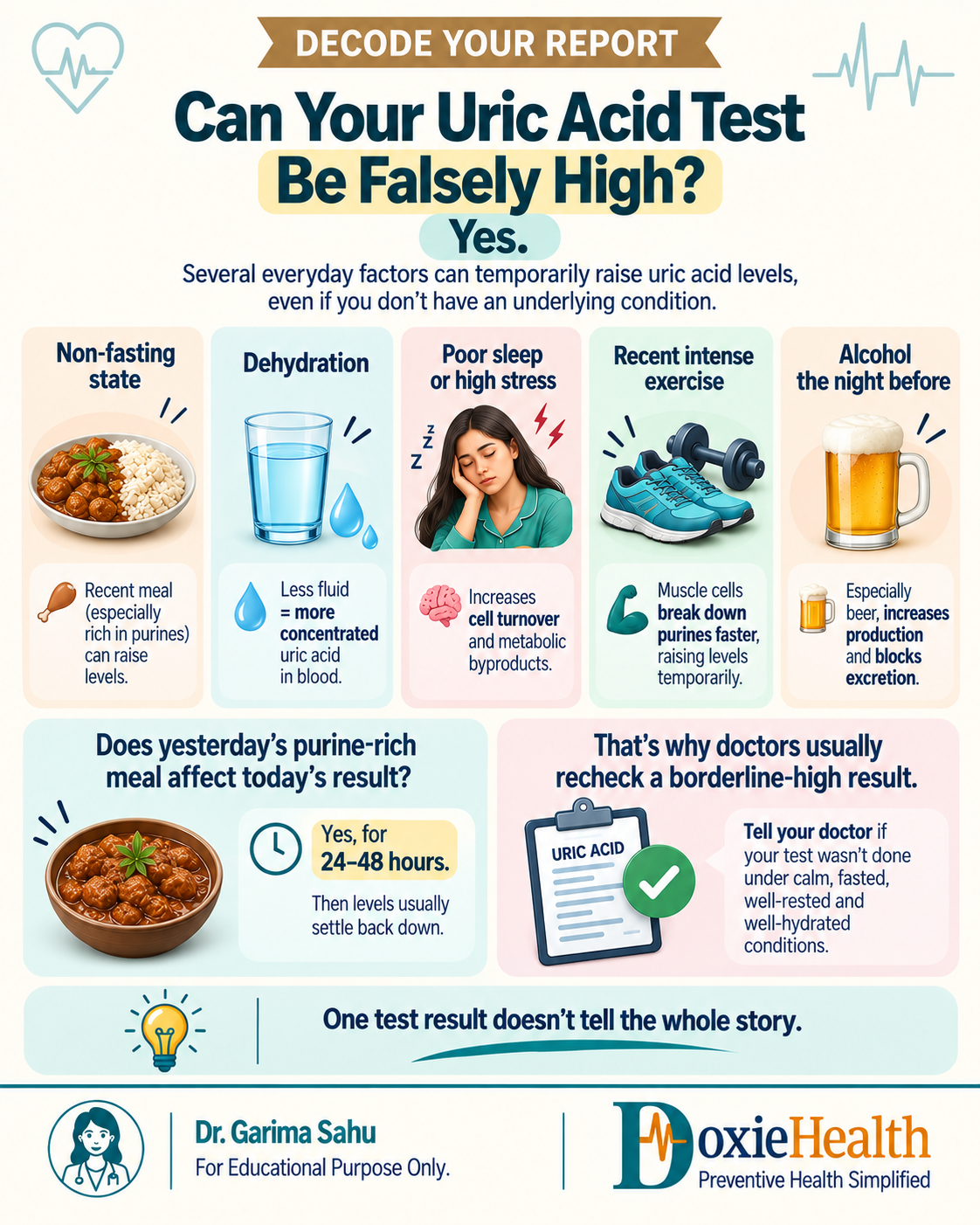
Can Your Uric Acid Test Be Falsely High?
This is a genuinely common source of confusion, and the answer is yes; several everyday factors can temporarily push uric acid up, independent of any underlying condition:
Non-fasting state: a recent meal, especially one rich in purines, can raise the reading
Dehydration: less fluid means blood is more concentrated, including the uric acid dissolved in it
Poor sleep or high stress: both increase cell turnover and metabolic byproducts
Recent intense exercise: vigorous exertion temporarily raises uric acid as muscle cells break down purines faster
Alcohol the night before: beer in particular both raises production and blocks excretion
Does yesterday’s purine-rich meal affect today’s result?
Often, yes, to some degree. Uric acid can rise for 24–48 hours after a heavy purine load (think mutton curry, shellfish, or organ meat) before settling back down.
This is why doctors usually recheck a borderline-high result rather than acting on a single reading and why it’s worth mentioning to your doctor if your test wasn’t done under calm, fasted, well-rested, well-hydrated conditions.
A high uric acid result isn’t always the whole story—hydration, food, exercise, sleep, and alcohol can temporarily affect your number.
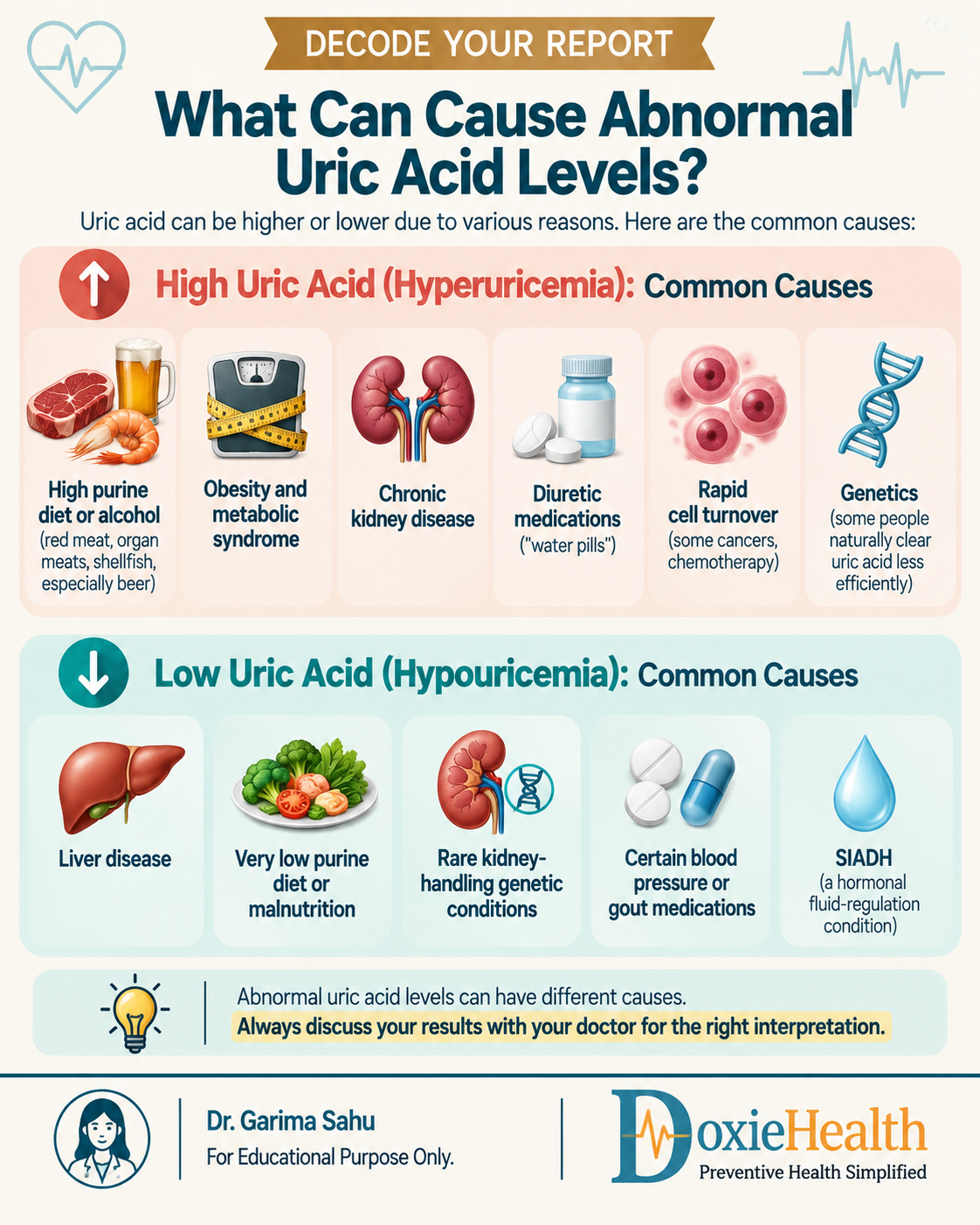
What Can Cause Abnormal Uric Acid Level?
High Uric Acid (Hyperuricemia): Common Causes
Diet high in purines (red meat, organ meats, shellfish) or alcohol, especially beer
Obesity and metabolic syndrome
Chronic kidney disease
Diuretic medications (“water pills”)
Rapid cell turnover (some cancers, chemotherapy)
Genetics — some people naturally clear uric acid less efficiently
Low Uric Acid (Hypouricemia): Common Causes
Far less common, and rarely causes symptoms on its own:
Liver disease
A diet very low in purines, or malnutrition
Certain rare kidney-handling genetic conditions
Some blood pressure or gout medications
SIADH (a hormonal fluid-regulation condition)
High or low uric acid? The cause matters. 🧪 Understanding what can shift your number helps you interpret your report in context.
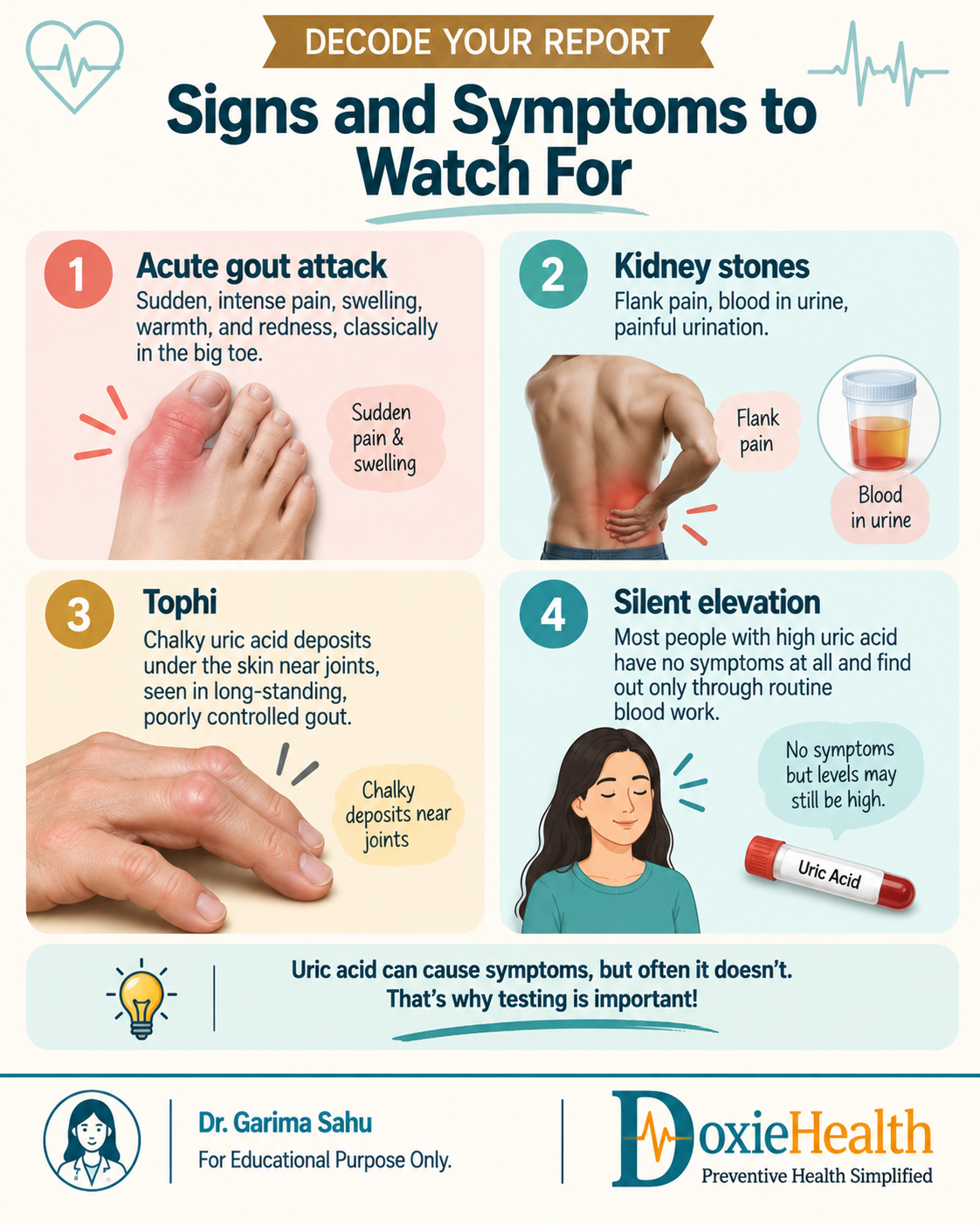
Signs and Symptoms to Watch For
Acute gout attack: sudden, intense pain, swelling, warmth, and redness, classically in the big toe
Kidney stones: flank pain, blood in urine, painful urination
Tophi: chalky uric acid deposits under the skin near joints, seen in long-standing, poorly controlled gout
Silent elevation: most people with high uric acid have no symptoms at all and find out only through routine blood work
High uric acid can cause gout, kidney stones, or visible deposits—but sometimes it causes no symptoms at all.
Treatment and Correction
Treatment depends on the cause and whether symptoms are present:
Asymptomatic high uric acid is often monitored rather than treated immediately; lifestyle changes come first
Active gout attack: anti-inflammatory medication to control the flare (not uric-acid-lowering drugs, which can worsen an attack if started too early)
Recurrent gout or very high levels: urate-lowering therapy (such as allopurinol or febuxostat), prescribed and monitored by a doctor
Underlying cause treatment: addressing kidney disease, adjusting a diuretic, or managing metabolic syndrome often improves uric acid on its own
Prevention
Stay well hydrated
Limit high-purine foods and alcohol, especially beer
Maintain a healthy weight; even modest weight loss lowers uric acid
Manage blood sugar and metabolic health broadly, not uric acid in isolation
Avoid crash diets or prolonged fasting, which can paradoxically raise uric acid
Key Clinical Insights
A single high reading isn’t a gout diagnosis; gout is confirmed by symptoms and, ideally, joint fluid analysis
Doctors typically recheck an abnormal result before treating it
Questions to Ask Your Doctor
Is my uric acid high enough to need treatment, or just monitoring?
Could my test conditions (fasting, hydration, recent meal) have affected this result?
Should I have my kidney function checked alongside this?
What dietary changes would actually make a meaningful difference for me?
👩⚕️ Doctor’s Note A single elevated uric acid reading, taken in isolation, usually isn’t an emergency. What matters is the trend, your symptoms, and how it fits with kidney function and test conditions not the number alone.
When Should You Be Concerned?
High uric acid + joint pain, swelling, redness → Possible gout attack. See a doctor promptly, ideally during the flare.
High uric acid + no symptoms → Usually monitored, not urgently treated.
High uric acid + abnormal creatinine → Needs closer follow-up given the kidney connection.
Very low uric acid → Rarely urgent, but worth mentioning, especially with liver-related symptoms.
The Takeaway
Uric acid is more than a “gout number”; it reflects your kidneys, your metabolism, and even what you ate and how you slept before your test. A single result rarely tells the full story, but understanding what shaped it gives you a far better starting point for the conversation with your doctor.
References
Harrison’s Principles of Internal Medicine, 21st Edition; Disorders of Purine Metabolism
Robbins Basic Pathology ; Gout and Crystal-Induced Arthropathies
Medical Disclaimer: This article is for educational purposes only and does not constitute medical advice, diagnosis, or treatment. Always consult a qualified healthcare professional for guidance about your specific health situation.
WRITTEN & MEDICALLY REVIEWED BY
Dr. Garima Sahu, MBBS
Physician & Founder, DoxieHealth
This article is for educational purposes only and does not replace professional medical advice


Leave a Reply