Do you feel an unexplained numbness or tingling in your hands and feet? Do you notice tremors or a vibration-like sensation that wasn’t there before? Do you forget things more than you used to, feel persistently low, or tire easily despite a full night’s sleep?
These are not always signs of stress or ageing. In India, they are frequently the first signs of Vitamin B12 deficiency – one of the most widespread and most overlooked nutritional deficiencies in the country.
Vitamin B12 deficiency is silent, progressive, and — if caught early — entirely correctable. This article explains what your B12 test result means, why deficiency is so common in India, what symptoms to watch for, and how to treat it effectively.
Since Vitamin D deficiency is extremely common and often overlaps with low B12 levels, don’t miss our detailed guide on symptoms, testing, and treatment of Vitamin D deficiency.
Vitamin B12 is a water-soluble vitamin that the body cannot produce on its own — it must come entirely from diet or supplementation.
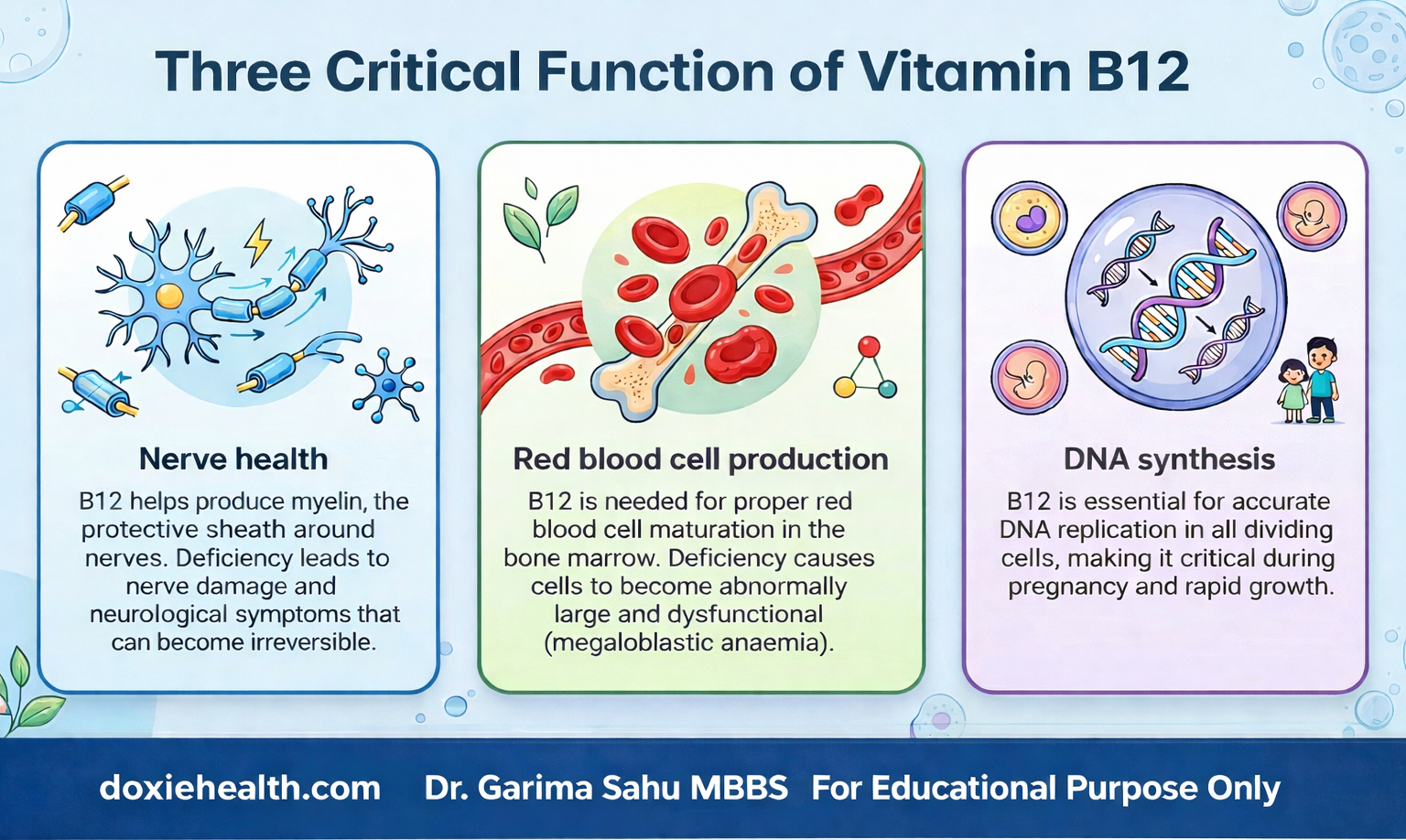
It performs three critical functions that no other nutrient can replace:
Educational infographic explaining the three critical functions of Vitamin B12—nerve health, red blood cell production, and DNA synthesis. Doxiehealth
Unlike most water-soluble vitamins, B12 is stored in the liver for 3-5 years. This means deficiency develops slowly, and symptoms often appear long after stores are depleted.
Vitamin B12 deficiency often leads to megaloblastic anaemia, a condition that is usually first detected through abnormalities in a Complete Blood Count (CBC). To better understand what these changes mean in your report, read our detailed guide on the CBC Blood Test.
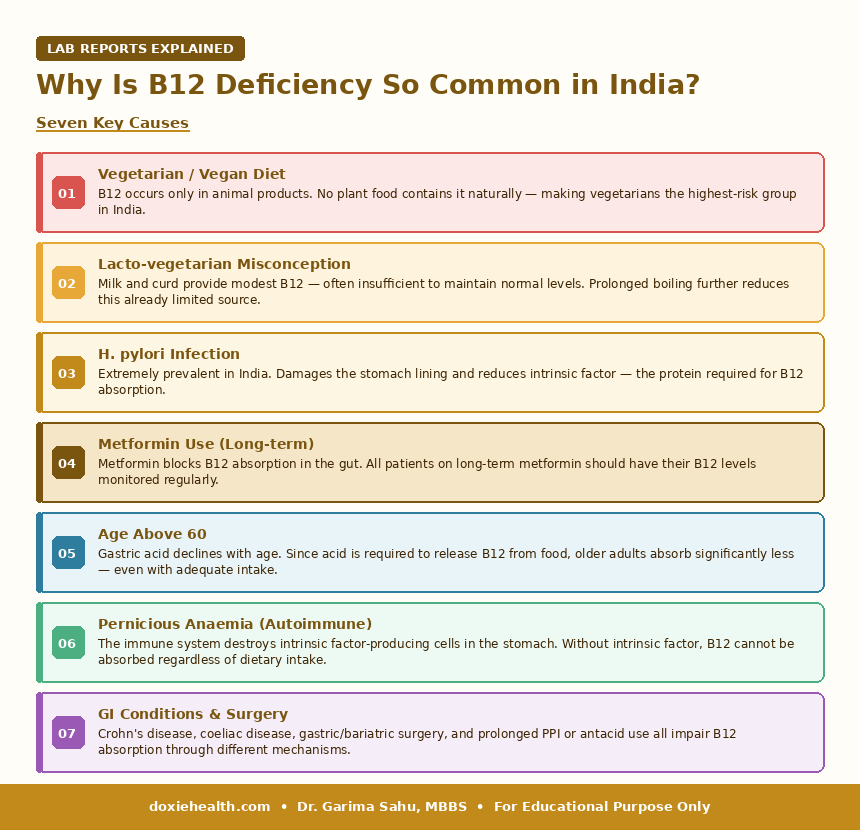
India has one of the highest rates of Vitamin B12 deficiency in the world. Studies estimate that 47% of urban Indians and up to 80% of Indian vegetarians have deficient or insufficient B12 levels. The reasons are specific and identifiable:
B12 Deficiency in India — Key Causes | Dr. Garima Sahu, MBBS — DoxieHealth
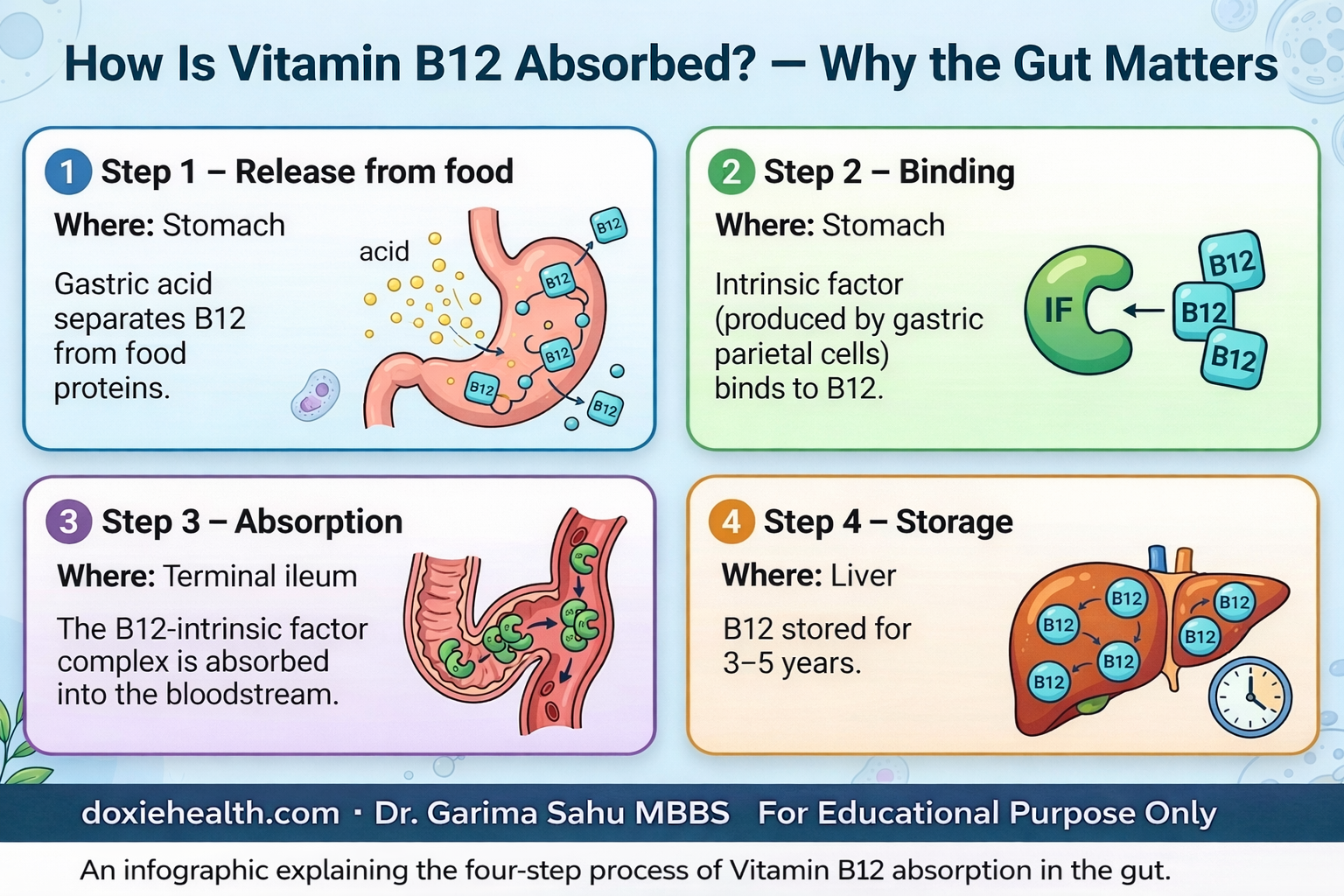
How Is Vitamin B12 Absorbed? — Why the Gut Matters
B12 absorption is more complex than most vitamins — and this complexity is why so many people become deficient even with adequate dietary intake.
Step-by-step overview of how vitamin B12 is absorbed and stored in the body. Doxiehealth
A problem at any step — low gastric acid, absent intrinsic factor, damaged ileum — results in deficiency regardless of how much B12 is consumed. This is why oral supplementation alone may not be sufficient in some cases, and injections become necessary.
Symptoms of Vitamin B12 Deficiency
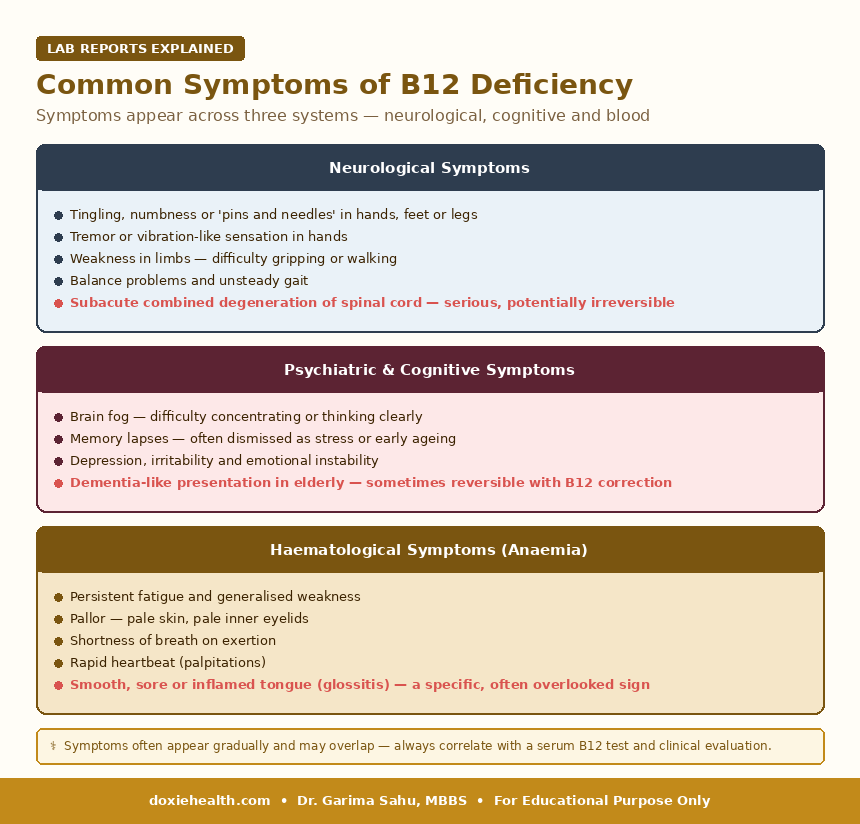
B12 deficiency affects three major body systems — and is frequently missed because symptoms develop slowly and can mimic other conditions.
B12 Deficiency Symptoms | Dr. Garima Sahu, MBBS — DoxieHealth
Other symptoms
Mouth ulcers — recurrent and unexplained
Mild jaundice — from breakdown of abnormal red blood cells
Hair thinning
Important:Neurological damage from B12 deficiency can become permanent if left untreated for a prolonged period. Unlike anaemia, which corrects fully with treatment, nerve damage may only partially recover. This is why early detection and treatment matter enormously.
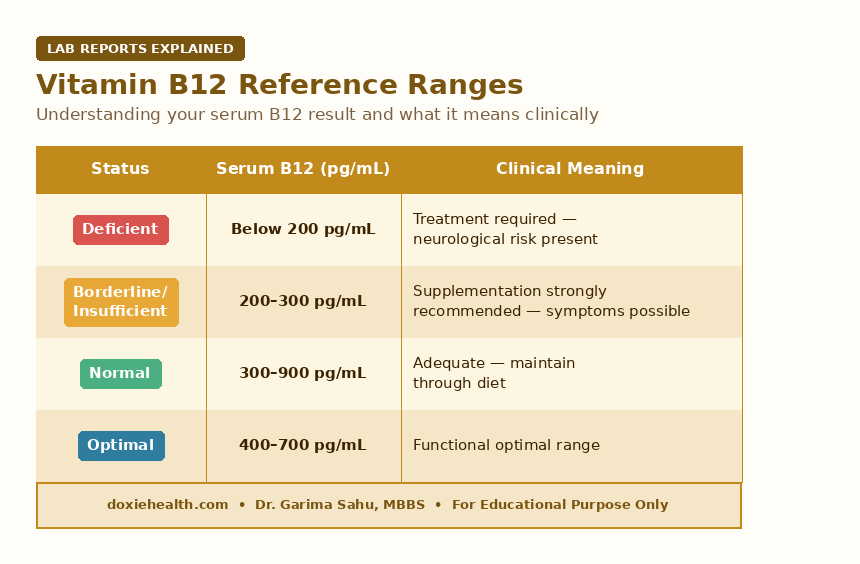
Understanding Your Vitamin B12 Test Report
Your blood test measures serum Vitamin B12 in picograms per millilitre (pg/mL).
Important: Many labs report normal as 200-900 pg/mL. However, neurological symptoms can appear between 200-300 pg/mL. Most current guidelines recommend treating anyone below 300 pg/mL — particularly if symptoms are present. Do not wait for a result below 200 pg/mL before acting.
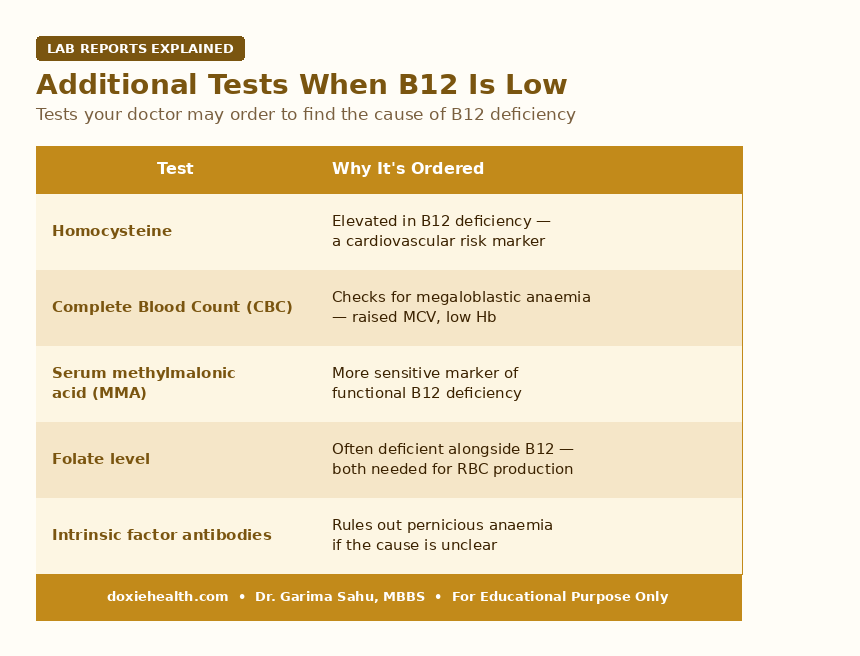
Additional tests your doctor may order
Additional Tests When B12 Is Low | Dr. Garima Sahu, MBBS — DoxieHealth
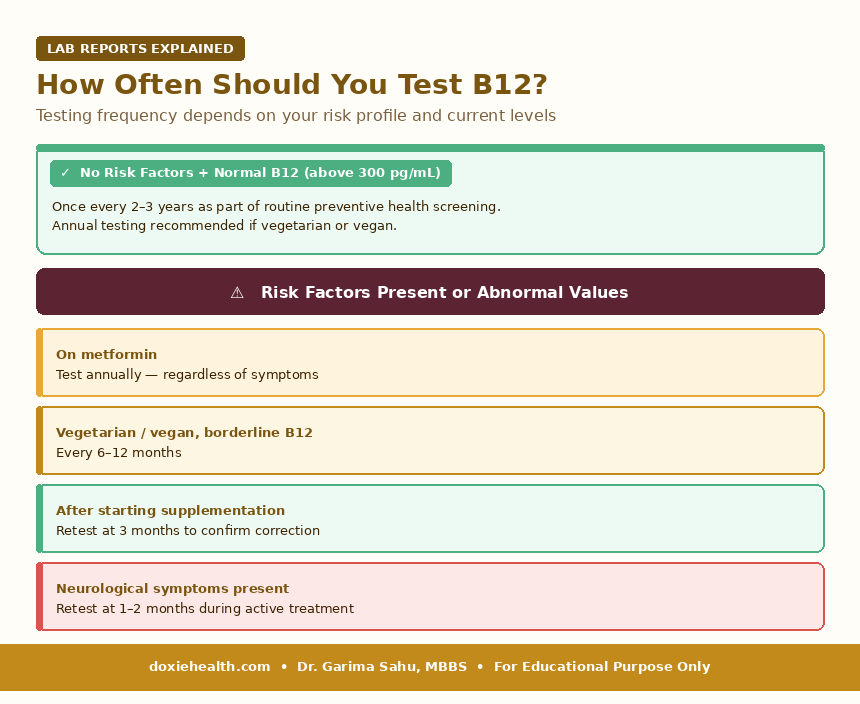
How Often Should You Test?
How Often Should You Test B12? | Dr. Garima Sahu, MBBS — DoxieHealth
VitaminB12 and Homocysteine — The Heart Connection
Low B12 raises homocysteine — an amino acid that accumulates when B12 (and folate) are insufficient for normal metabolism.
Elevated homocysteine directly damages the inner lining of blood vessels (endothelium), promotes clot formation, and accelerates atherosclerosis – adding cardiovascular risk entirely independent of cholesterol levels.
In India, wherevegetarian diets are common and B12 deficiency is widespread, elevated homocysteine is a significant and underappreciated cardiovascular risk factor. This is why doctors managing abnormal lipid profiles increasingly check B12 and homocysteine alongside cholesterol values.
Cardiovascular risk is best evaluated together with cholesterol levels. You can read our guide on the lipid profile test to understand these markers better.
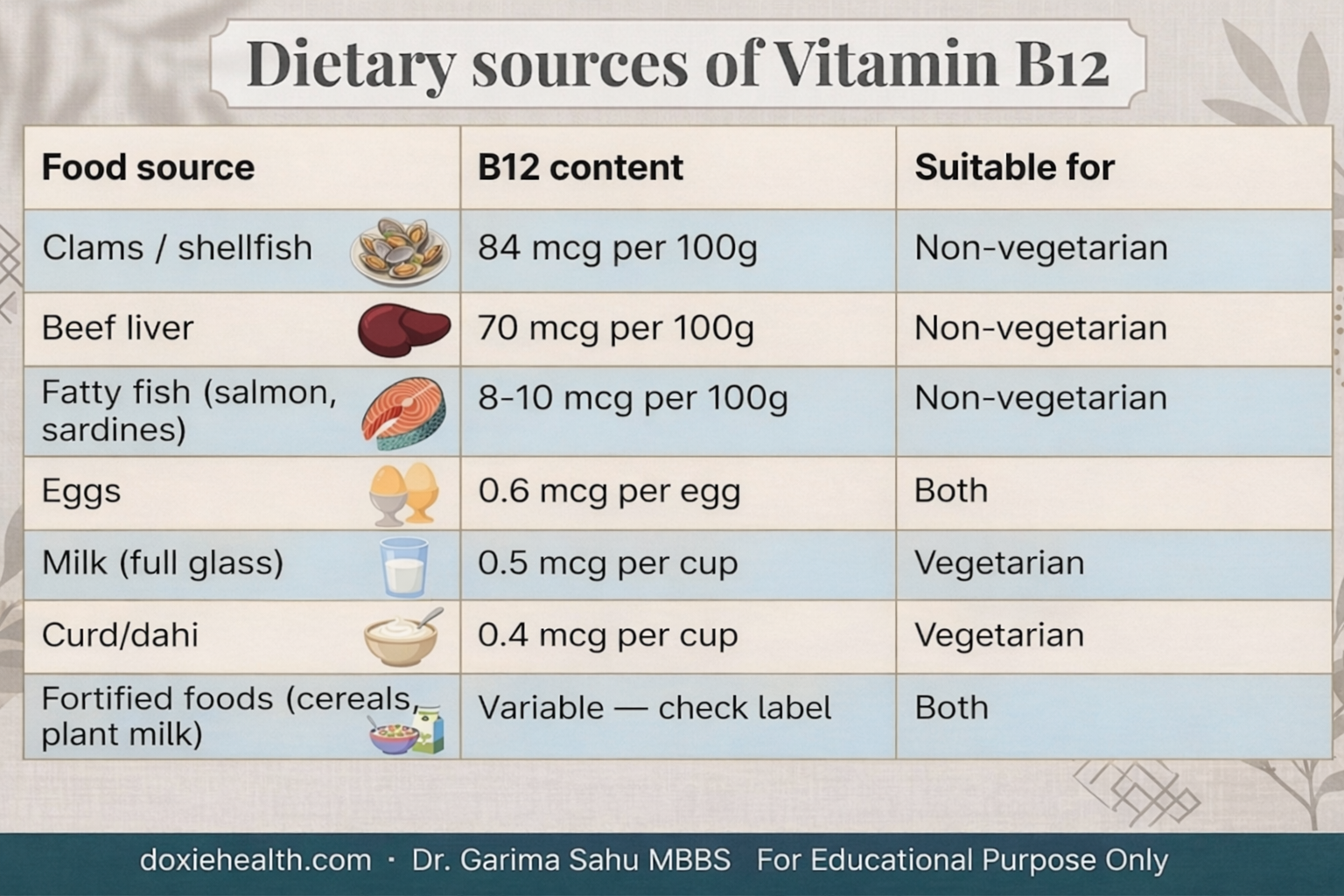
Common dietary sources of Vitamin B12 with approximate B12 content to help identify vegetarian and non-vegetarian options.
Note for vegetarians: Dairy and eggs provide B12, but in amounts that are often insufficient to correct a deficiency or maintain optimal levels. Supplementation is practically essential for most Indian vegetarians with low B12.
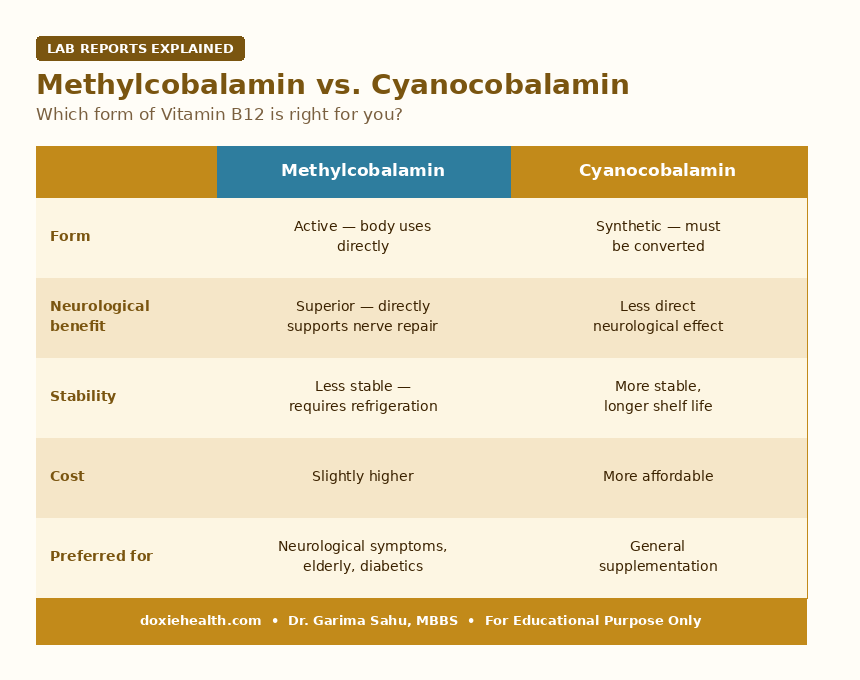
Methylcobalamin vs Cyanocobalamin — Which Is Better?
Methylcobalamin vs. Cyanocobalamin | Dr. Garima Sahu, MBBS — DoxieHealth
Verdict: Methylcobalamin is generally preferred in the Indian context, particularly when neurological symptoms are present or when the patient is diabetic or elderly.
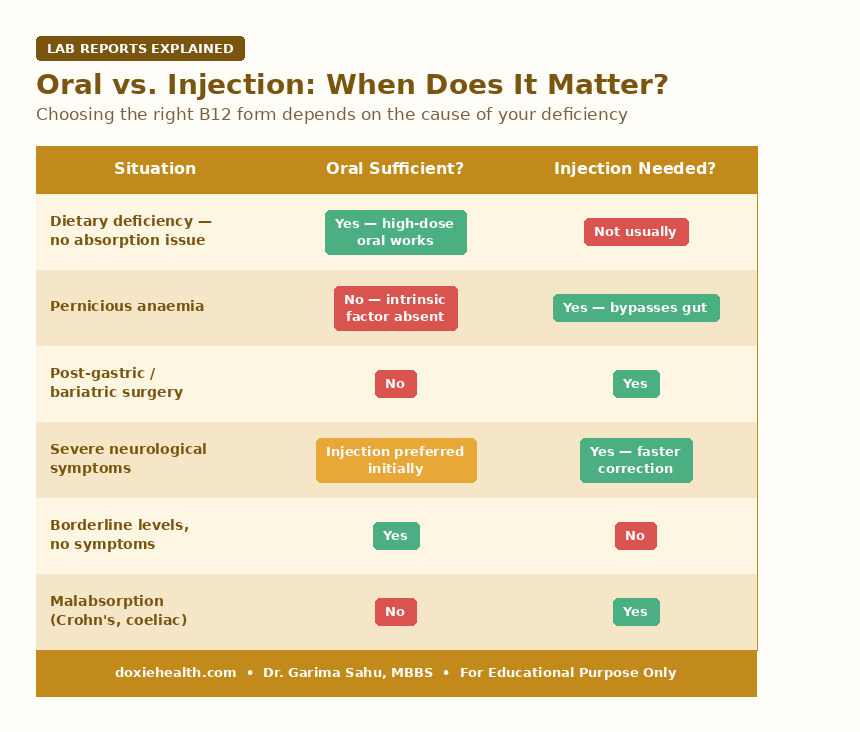
Oral vs Injection — When Is Injection Necessary?
Oral vs. Injection B12 — When Does It Matter? | Dr. Garima Sahu, MBBS — DoxieHealth
Note on dosage: Oral dose guidance varies across guidelines (BNF, Harrison’s, Indian guidelines). The higher oral doses work on the principle that ~1% of B12 is absorbed passively without intrinsic factor — effective even in absorption disorders. Always confirm your specific dose with your doctor.
Key Clinical Insights
Folate and B12 are not the same.
Folate supplementation can mask B12 deficiency anaemia on a blood test while neurological damage continues silently. Never supplement folate alone without ruling out B12 deficiency.
Metformin users must monitor B12 annually.
The longer the duration and the higher the dose, the greater the risk. This is a widely under-practised recommendation in India.
Neurological recovery depends on duration.
Symptoms present for less than 6 months recover well with treatment. Beyond that, recovery is partial. Early treatment is critical.
B12 and thyroid:
Low B12 is commonly found alongside hypothyroidism — both should be checked when either is suspected.
Recheck before stopping supplementation.
Blood levels normalise before tissue stores are fully replenished. Continue for the full recommended duration.
👩⚕️Doctor’s Note In India, B12 deficiency is almost a default finding in vegetarian patients — and yet it remains dramatically undertreated. I have seen patients dismissed with antidepressants or labelled as anxious when their real problem was a B12 level of 180 pg/mL. If you are a vegetarian, over 40, on metformin, or experiencing tingling, tremors, fatigue, or memory issues — ask for a serum B12 test. It costs under Rs. 500 and can change everything.
When Should You Be Concerned? Serum B12 below 200 pg/mL — frank deficiency with neurological risk. Tingling, numbness, tremors, weakness, or balance problems alongside a low result. Vegetarian, pregnant, or on metformin and B12 have never been checked. Levels not improving after 3 months of oral supplementation — may need injections. Depression or memory issues not responding to standard treatment — rule out B12 deficiency.
The Takeaway
Vitamin B12 deficiency is silent, progressive, and common — particularly in India, where vegetarianism is common. A serum B12 test is inexpensive and widely available.
If your level is below 300 pg/mL, treatment is straightforward — but the form, dose, and route of supplementation matter.
Retest at 3 months, confirm correction, and maintain optimal levels long-term. The neurological consequences of prolonged, untreated deficiency are too significant to ignore.
Questions to Ask Your Doctor
My B12 is low — do I need oral supplements or injections?
Should I take methylcobalamin or cyanocobalamin?
I am on metformin — how often should my B12 be checked?
Should my homocysteine, folate, and CBC be checked alongside B12?
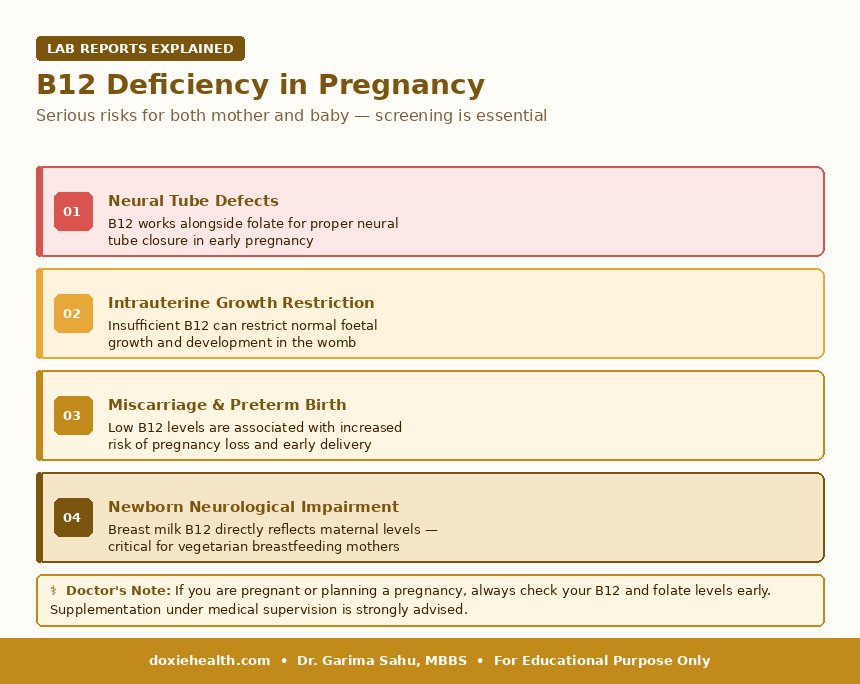
I am pregnant or planning pregnancy — what dose is safe for me?
How long should I wait before retesting to confirm the correction?
References
1. Stabler SP. Vitamin B12 Deficiency. New England Journal of Medicine. 2013;368:149-160. Read here →
2. Yajnik CS et al. Vitamin B12 and folate concentrations during pregnancy and insulin resistance in the offspring. Diabetologia. 2008;51(1):29-38. Read here →
3. Kapil U et al. Vitamin B12 status of vegetarian and non-vegetarian Indian adults. Indian Journal of Medical Research. 2017. Read here →
4. de Jager J et al. Long term treatment with metformin in patients with type 2 diabetes and risk of vitamin B-12 deficiency. BMJ. 2010;340:c2181. Read here →
5. Harrison’s Principles of Internal Medicine, 21st Edition. McGraw-Hill, 2022.
Medical Disclaimer: This article is for educational purposes only and does not constitute medical advice, diagnosis, or treatment. Always consult a qualified healthcare professional for guidance about your specific health situation.
WRITTEN & MEDICALLY REVIEWED BY
Dr. Garima Sahu, MBBS
Physician & Founder, DoxieHealth
This article is for educational purposes only and does not replace professional medical advice




Leave a Reply